

For me, silence is to music what an empty space is for geometry. It's not a dreaded blank page — it's the fundamental material from which you construct everything of value.
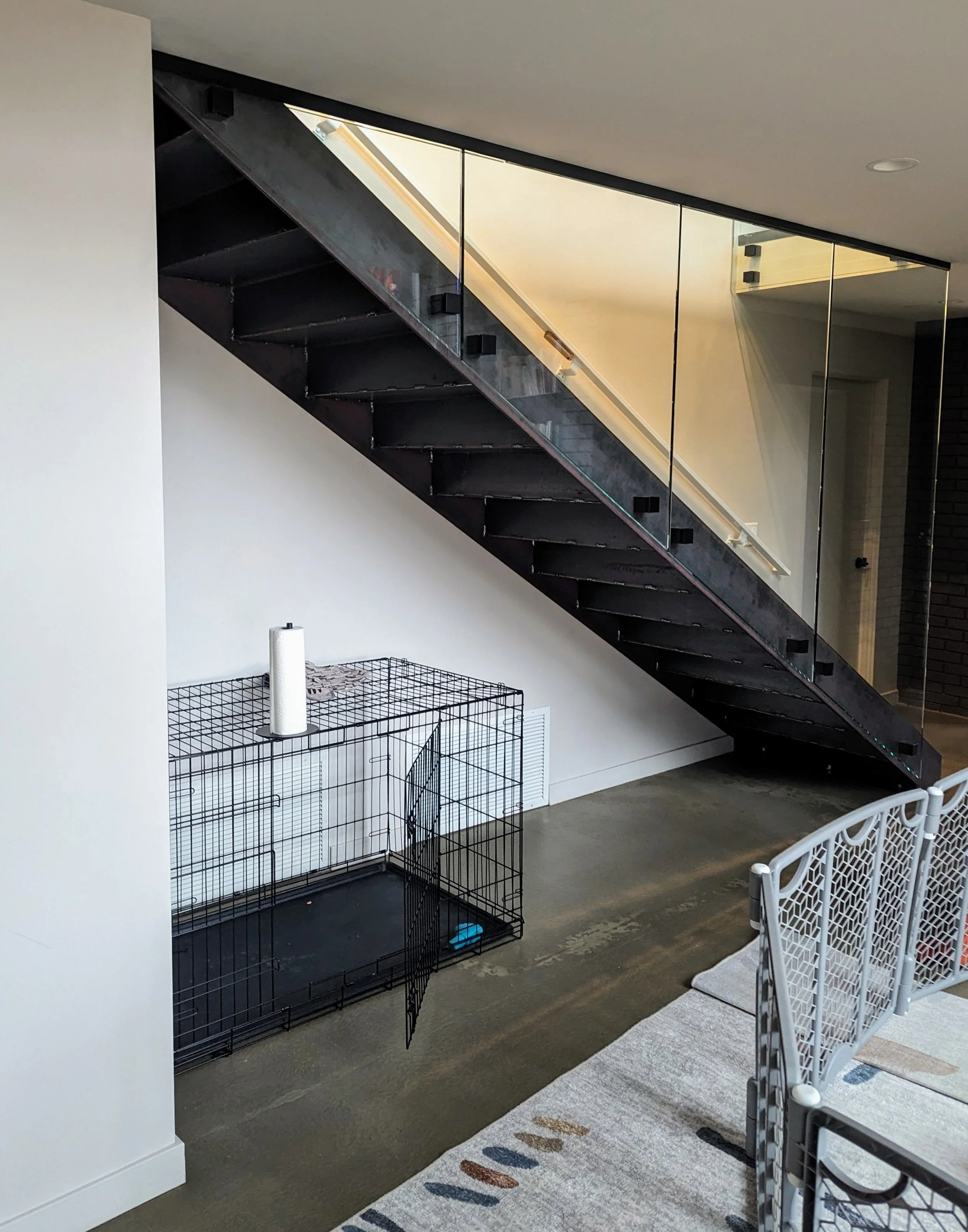
Under a staircase in Ali and Eduardo's Salt Lake City home sat exactly that kind of silence: an awkward alcove with no purpose and no presence. Next to it, a tiny slatted credenza held their turntable and a Vestaboard that read "Best thing since sliced bread." They loved that little credenza so much it became the DNA for everything that followed.
The question was never "what do we put here?" It was: how do you bring dead space to life?
Eduardo came with a singular mission — to transform this alcove into a setting worthy of guarding a family treasure: hundreds of vinyl records collected devoutly by his father throughout the '70s and '80s. The goal was to honor not just the music, but the memory and the ritual of listening.
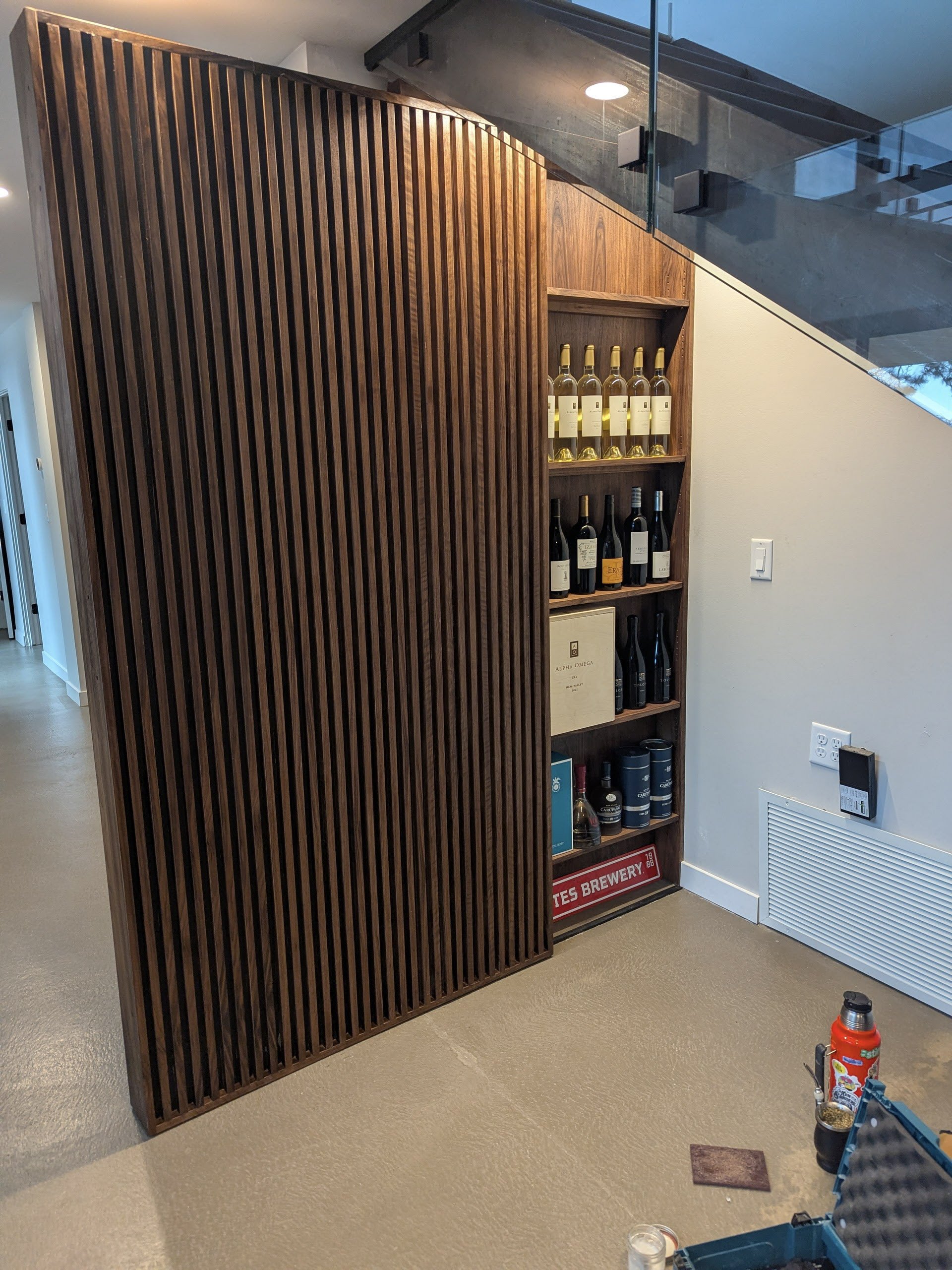
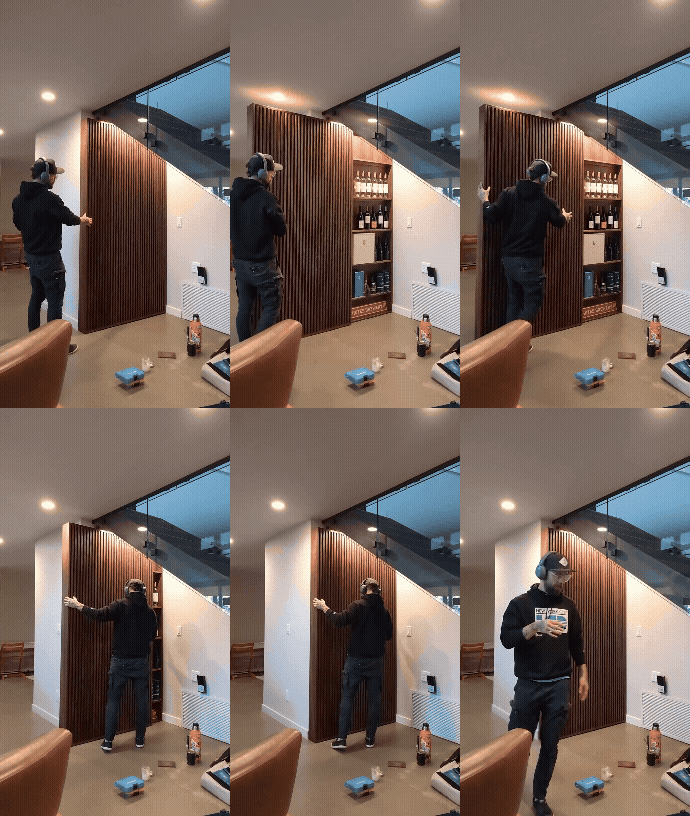
The answer became The Nook: a two-phase project to transform the alcove into a minimalist sanctuary for their decades-old vinyl collection, with a hidden wine closet behind a 200-pound slatted door. Just as music finds its beauty in the juxtaposition of sound and silence, we designed the space as an interplay of mass and void — wood and light.
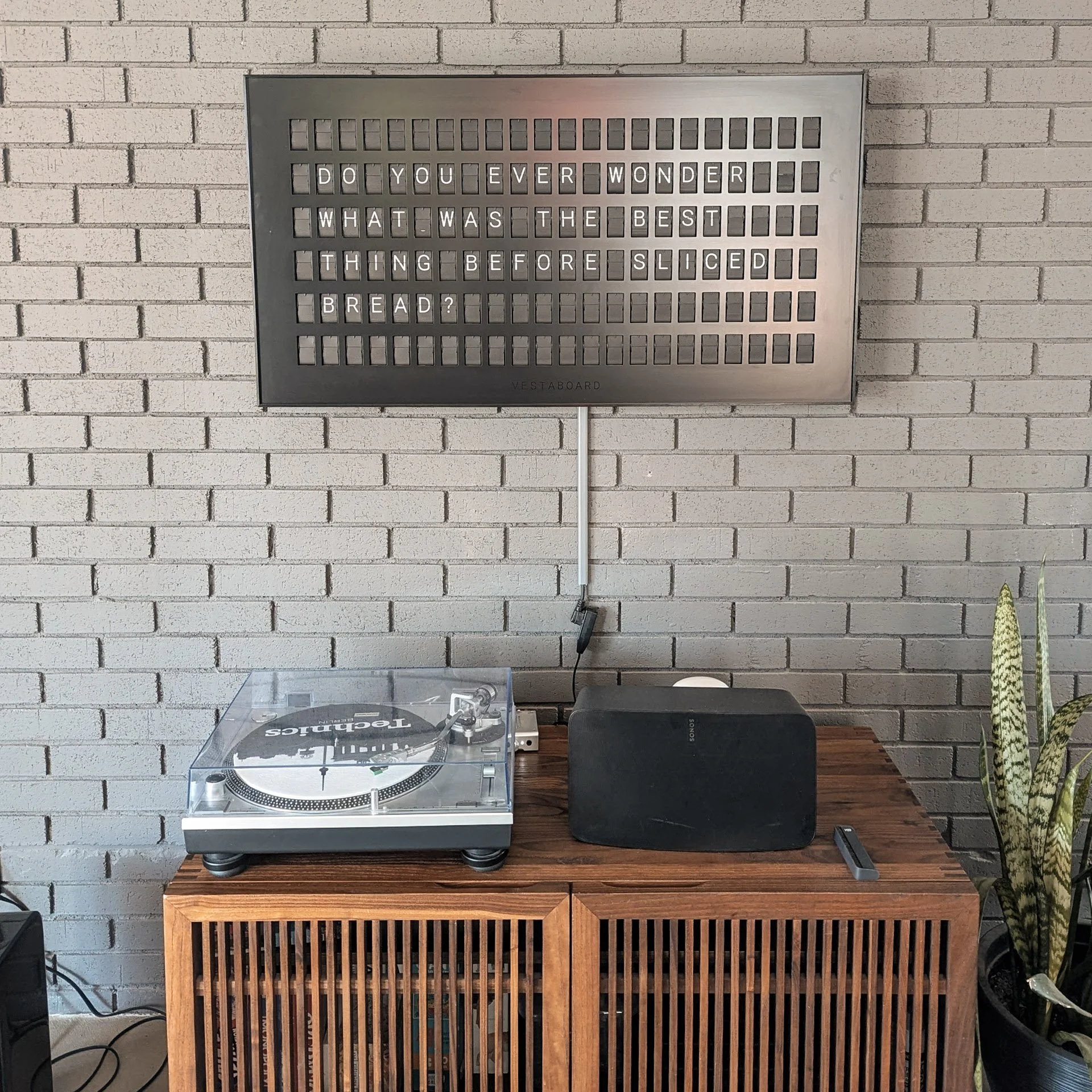
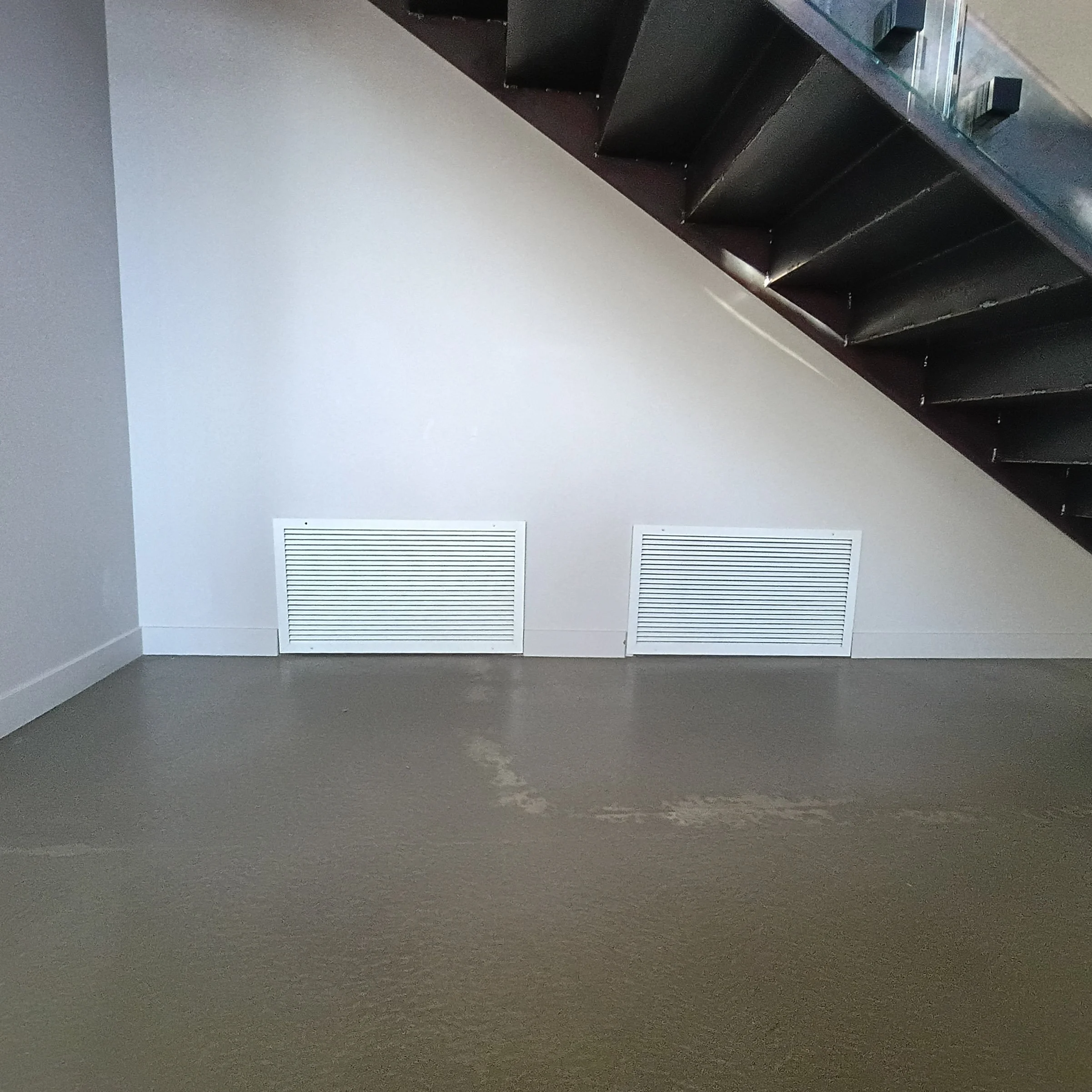

It started with the credenza. Eduardo's father had spent decades collecting vinyl through the '70s and '80s, and the one thing I knew from the beginning was that the record drawers had to slide out on rails — full extension, so you could stand there and flip through the covers one by one until something caught you. That ritual of browsing was the whole point. I built several versions of the design around that idea.
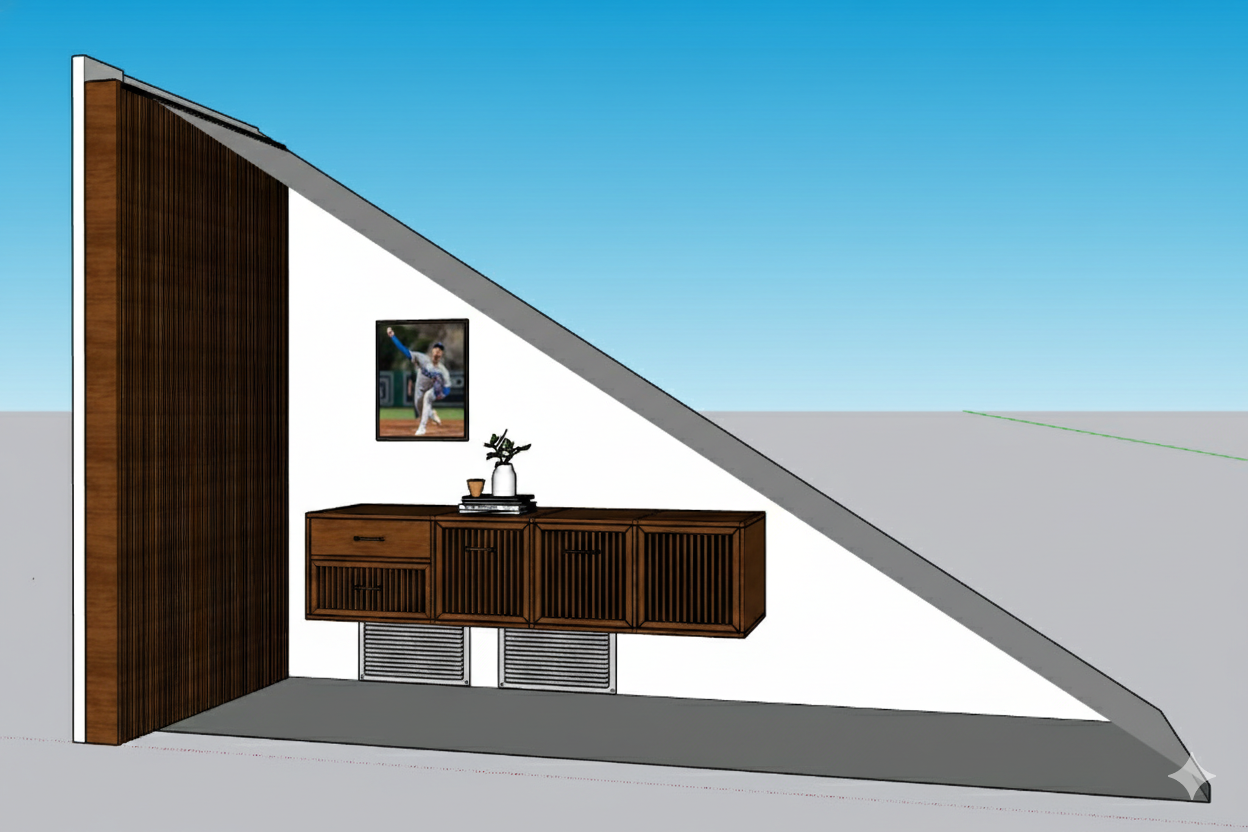
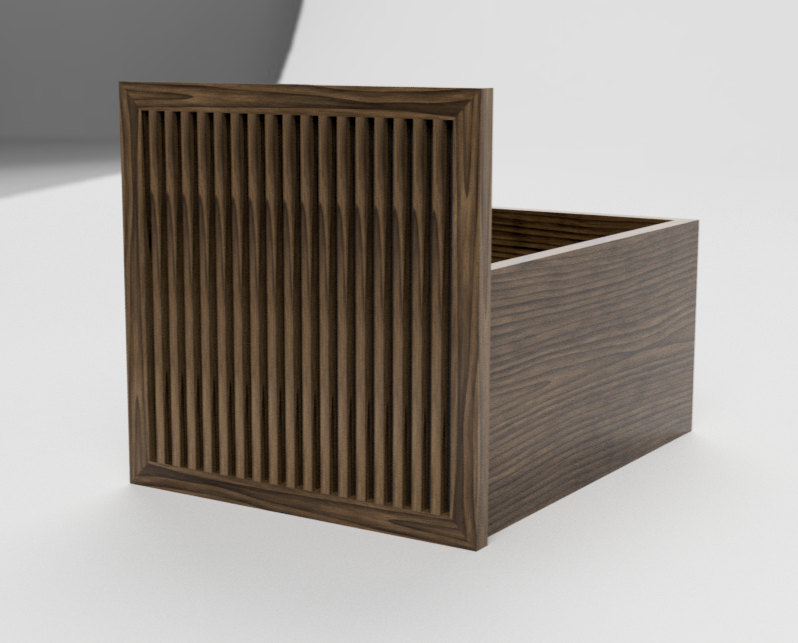
Then the clients changed the project. In one of those early credenza renderings, Ali and Eduardo spotted a slatted wall in the background and said, "We want that." Together, we realized the slats could become a full-height sliding door — concealing not just storage but an entire wine closet behind it. One design detail turned into two projects.
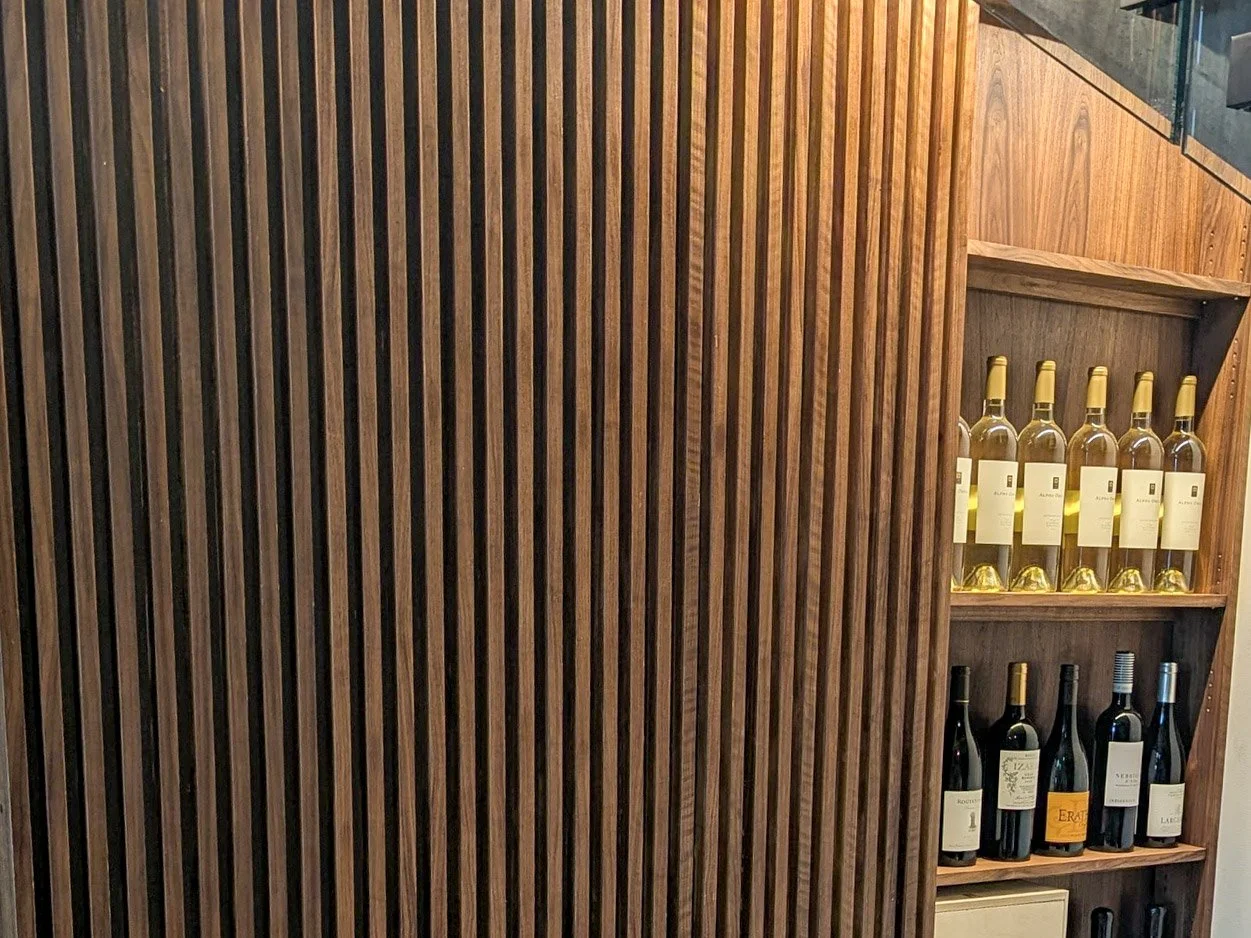
Phase 1 would be the door: a slatted sliding panel hiding the wine closet, setting the architectural tone for the whole space. Phase 2 would be the floating credenza — the piece that started it all — carrying that same slatted language into furniture to house the vinyl collection and a Technics 1200. The slats became the leitmotif: walnut over a matte black void, repeated across architecture and furniture.
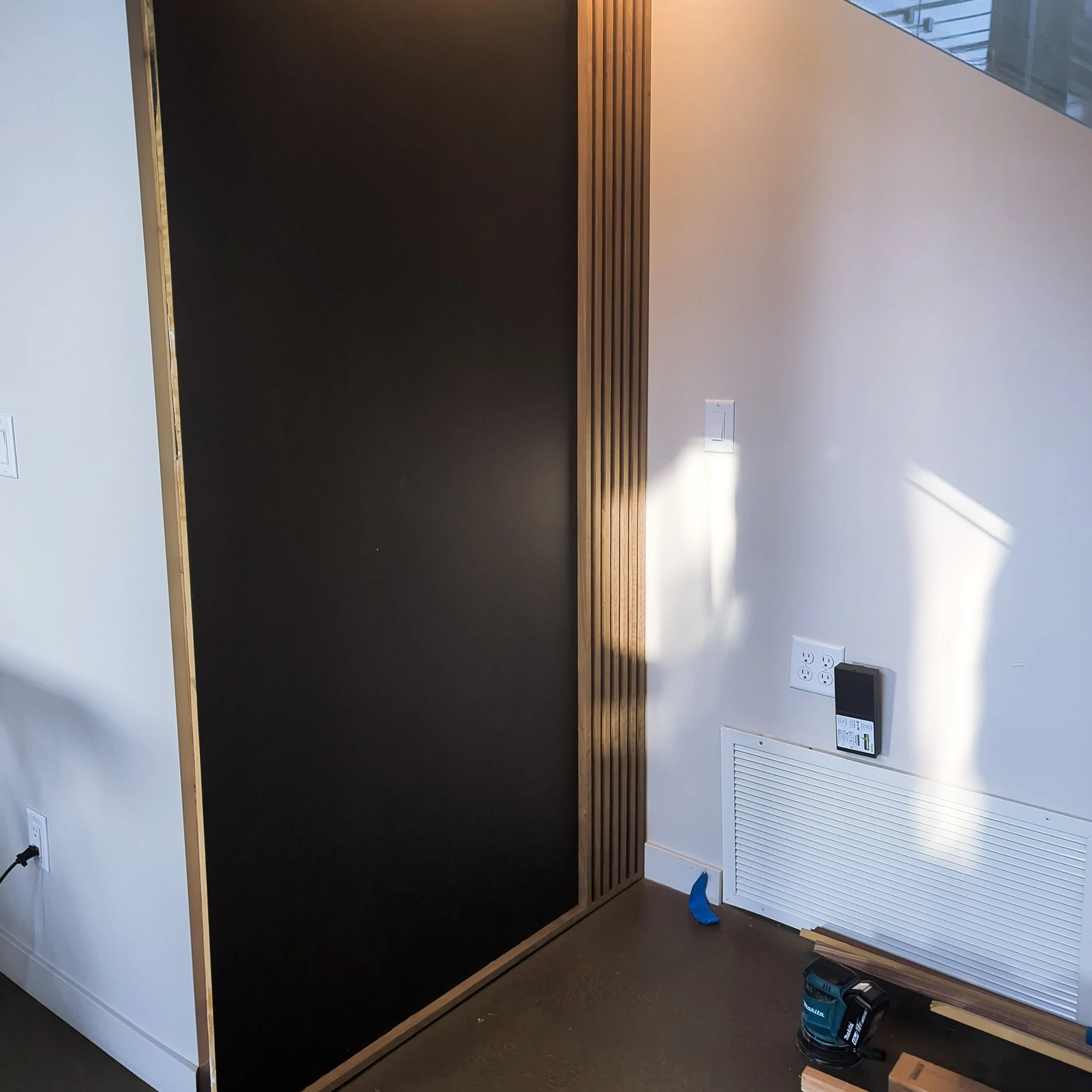
Behind those slats: Tricorn Black, flat, critical — paint that swallows light and makes the walnut appear to float in nothing. 37 slats of solid American walnut, each ¾" × 1" × 90", spaced with custom 5-slat jigs for perfect consistency. Every decision pointed toward one thing: make it feel like it was always part of the house — providing options while staying invisible.
But first — the door.

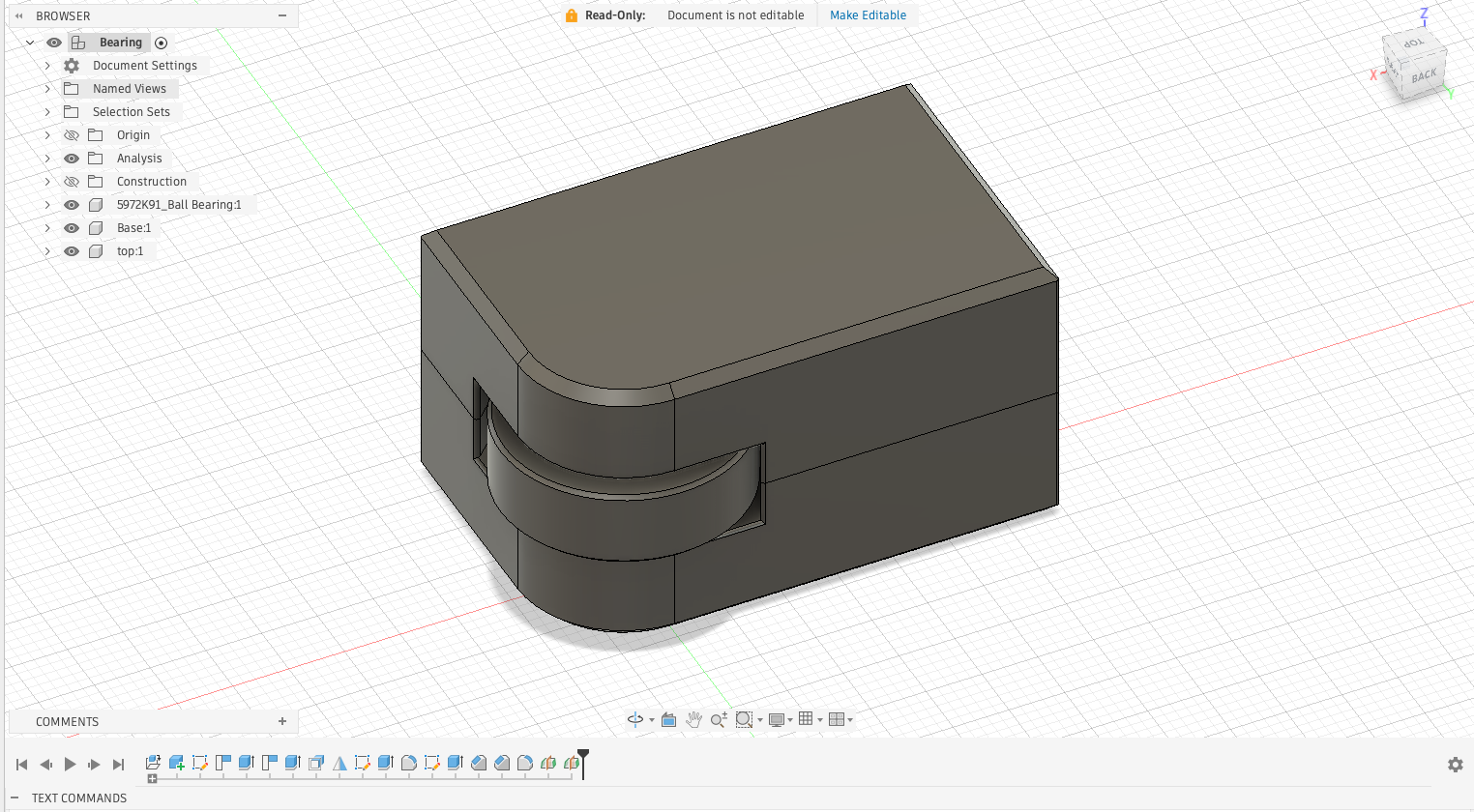
Once the design was finalized, the math told the story: this was going to be a 200-pound door. I spent a lot of time on the computer and prototyping ideas with the 3d pruiter. No off-the-shelf sliding system was going to work. The smaller commercial rails couldn't handle the weight. The heavy-duty ones could — but they were bulky, industrial, and would have destroyed the aesthetic. The whole point was invisible hardware.
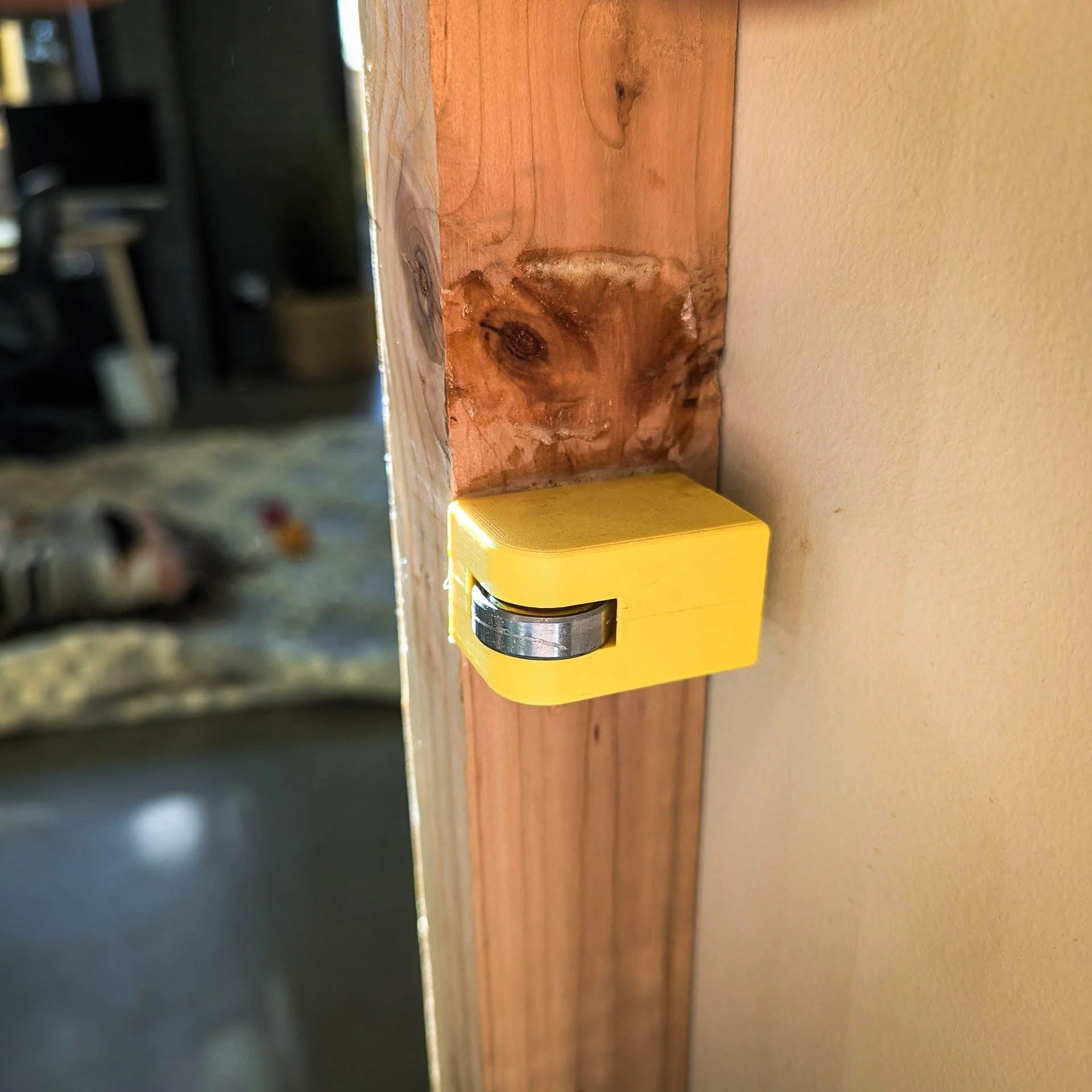
The solution was a hybrid. A commercial rail handles the top, keeping the door hung and aligned. But the bottom was a different problem entirely: the door needed to sit fully on the ground at all times while sliding smoothly. No floating, no swinging. For that, I needed wheels that could ride clean, take a beating, and disappear. The answer came from a world I know well: inline skates. If they can handle a 300-pound human jumping stairs, they can handle a door.
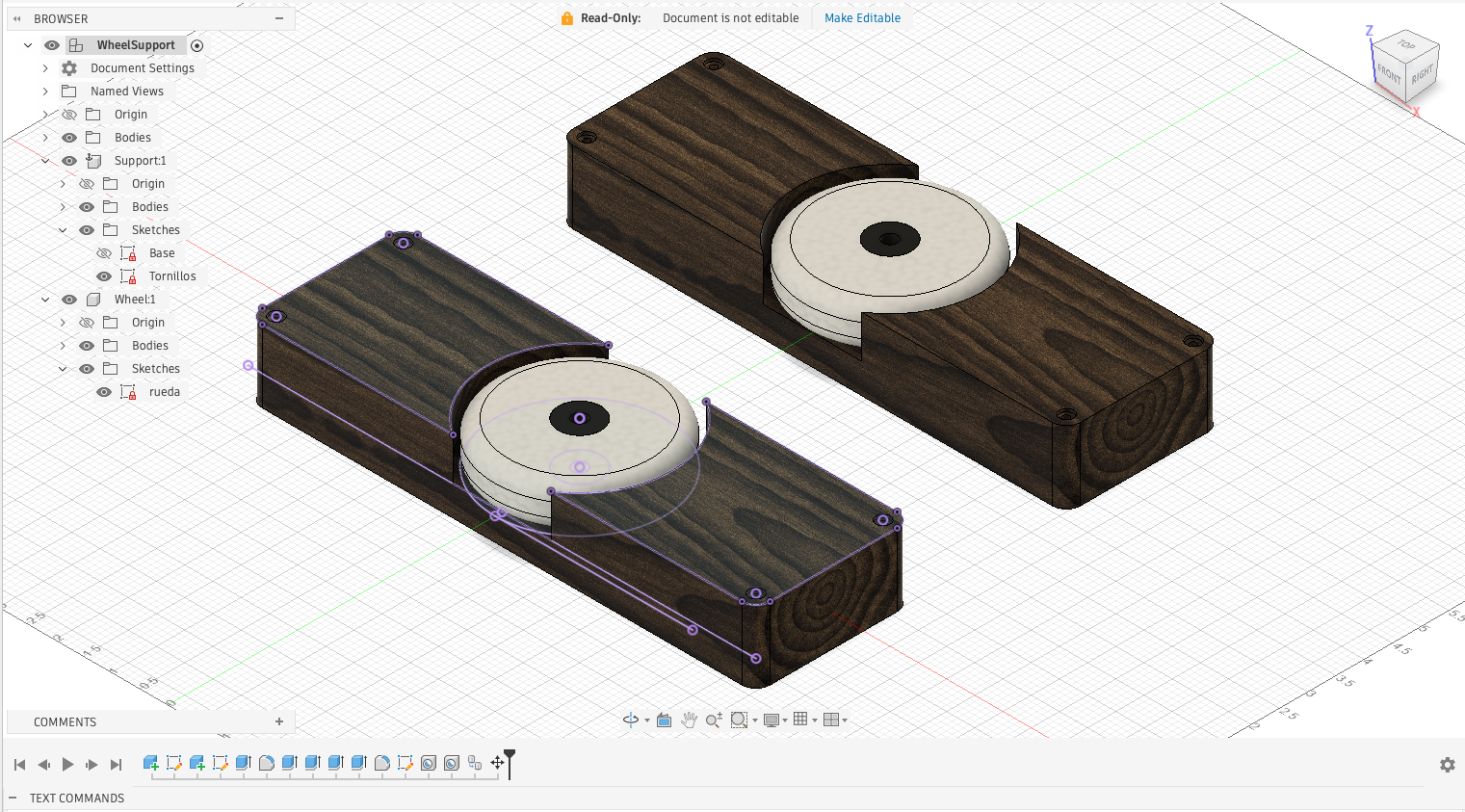
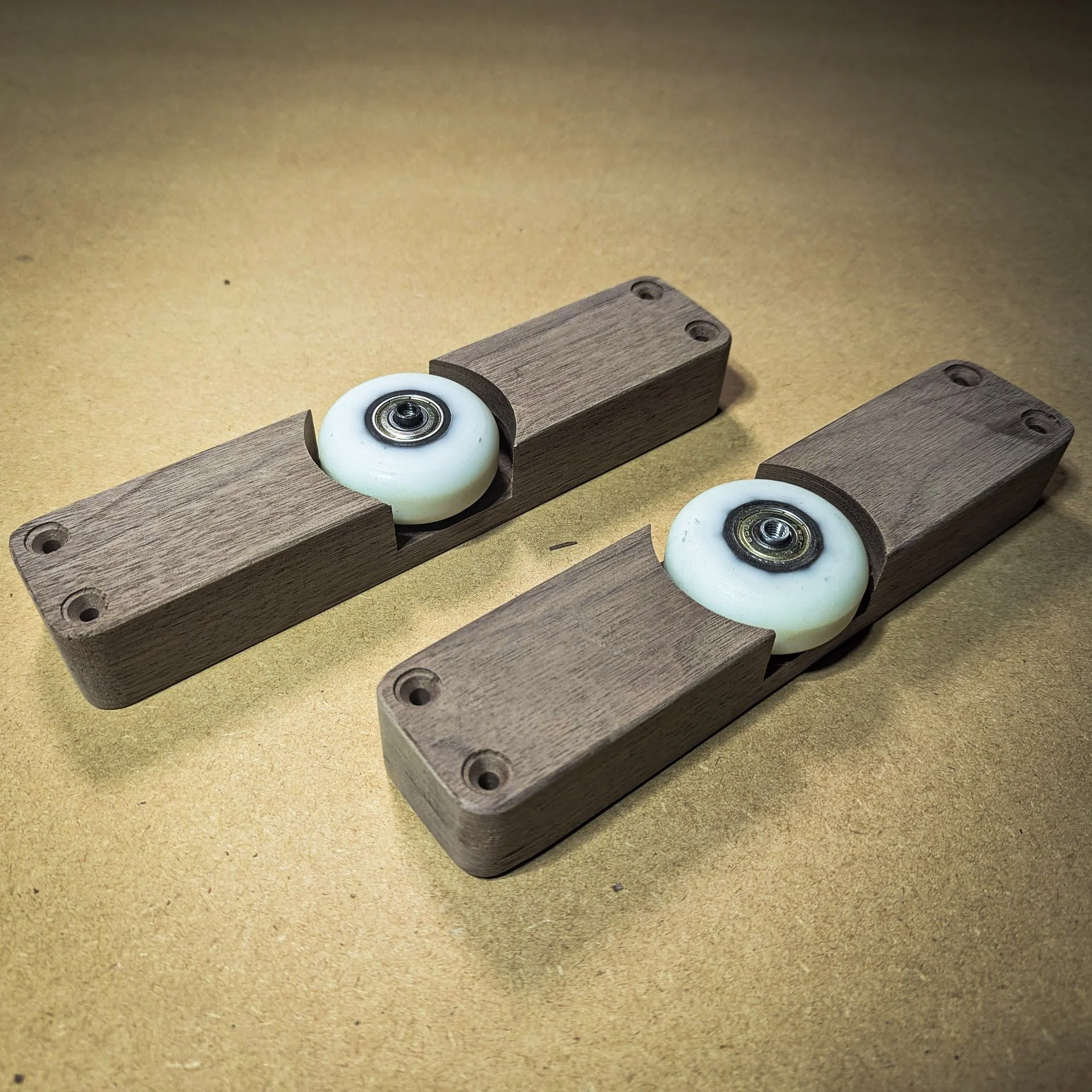
I spent hours on the computer and the CNC prototyping custom "one-wheelers" — tiny walnut mounts designed to cradle the skate wheels, bolted through the base of the door. Then came the wobble. A perfectly straight guide rail caused the door to drift and shake. The fix was counterintuitive: a slightly curved quarter-pipe rail at the bottom, shaped to match the wheel profile, with bearings to keep everything aligned. The "crooked" rail runs smooth. The straight one didn't. Reality versus theory — OCD lives in theory; the workshop lives in reality.
That was the hard part. By comparison, the credenza is straightforward engineering. Floating credenzas have been built for decades — find the studs, bolt in your runners, hang the piece. The door was the problem that needed solving first.
The second engineering challenge had nothing to do with wood. We wanted light that would wash down the slats and deepen the contrast between the walnut and the black void behind them — not illuminate the door, but sculpt it. For that, I brought in my friend Scott, who did a tremendous job dialing in exactly the right wash.
Trickiest parts of the job? Done. Now I could finally paint and slat away.

This was a job of patience.
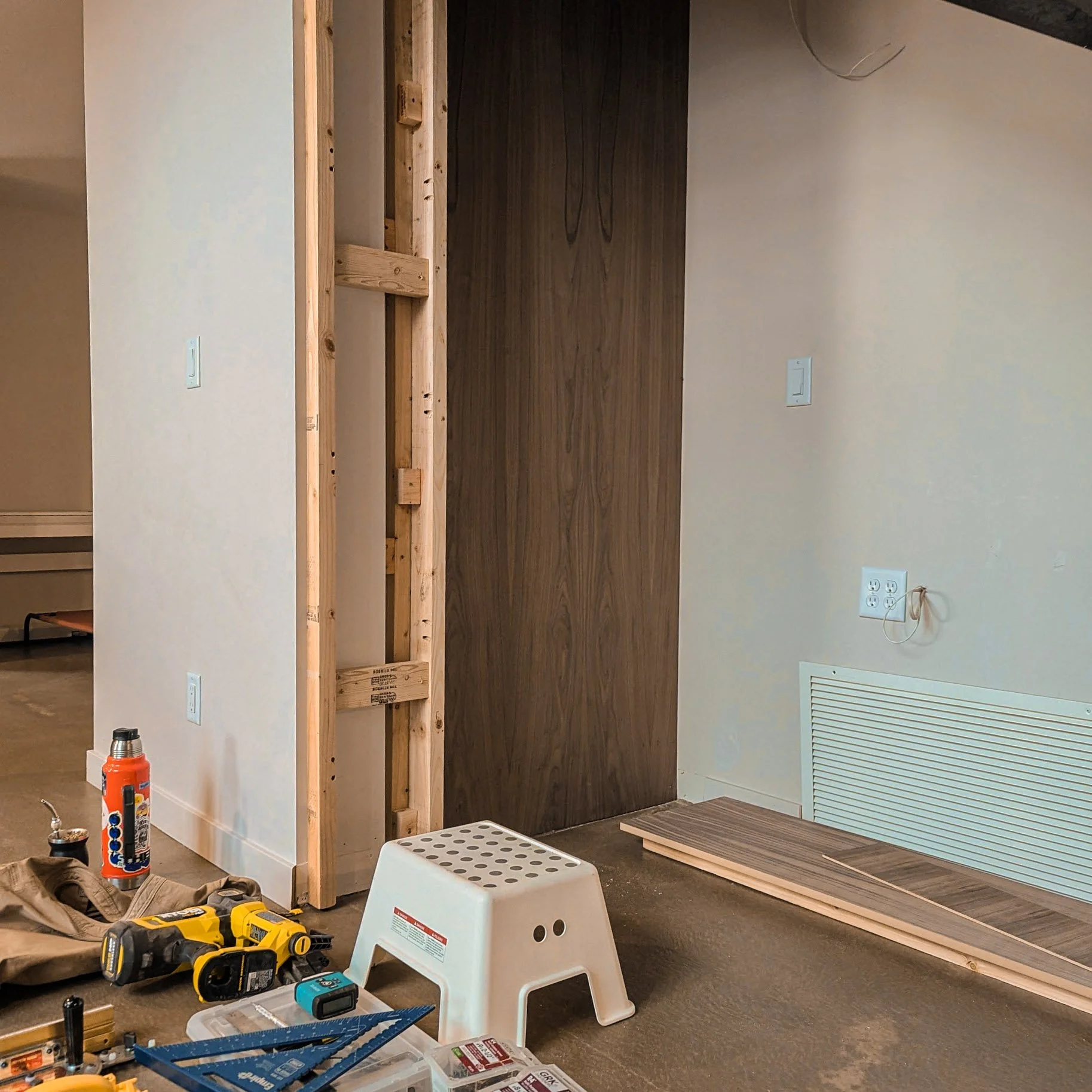
It starts with the framing — and framing is ugly work. You're building with pine into drywall, raw and rough, and you have to resist the urge to make it pretty because no one will ever see it. That's harder than it sounds. You want to finesse everything, but the frame just needs to be square, solid, and gone. For a moment, bolting into drywall feels precarious — not stable enough for what's about to hang on it. But then it locks in, and it holds, and you trust it.
Once the frame was up and the closet panels went in, things changed. The space started to make sense.
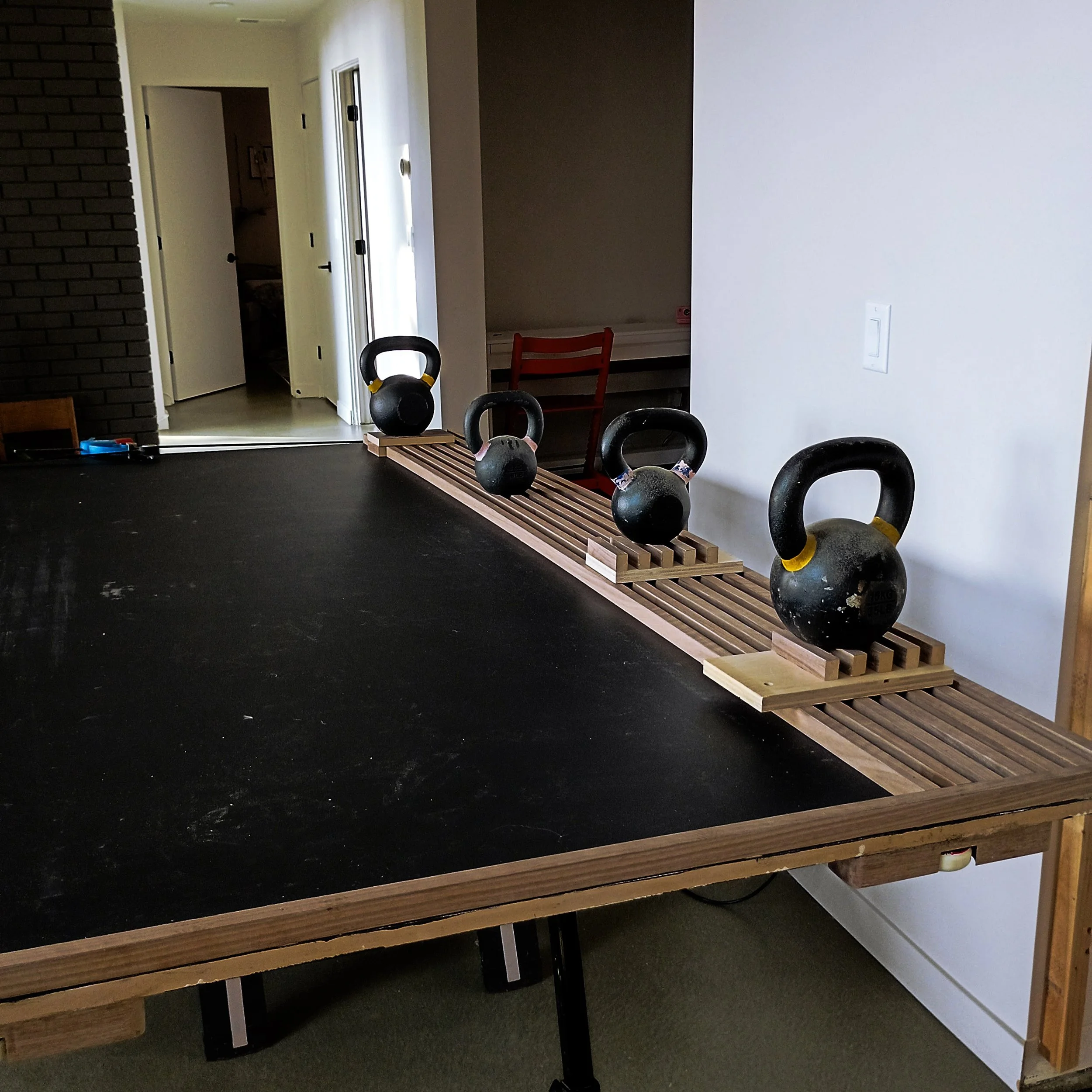
Then came the door. All the preparation in the shop paid off — every slat cut to spec before I ever showed up on site. You can't clamp slats onto an MDF panel the traditional way, so I used something simpler: dead weight. Kettlebells. Just set them down on the glue line and let gravity do the work. Then it's one slat at a time, slow and careful. The goal isn't to finish fast — it's to do the best job you can, which is a different kind of discipline entirely.
With a design like this, even a minor deviation screams at you. So you take your time. You deal with the discomfort of imperfect materials — wood glue that doesn't behave like wood, MDF that drinks paint, drywall that isn't quite plumb. You manage the mess and trust the process.
Each new slat added more weight to the wheels and the custom rail system I'd built from scratch. Every inch closer to the left side was a nerve-racking test: is this whole thing actually going to work?
The day I hung the full door for the first time — unfinished, not all the slats on yet — it held the weight and rode smooth. That was a fucking nice day.
Fortunately, I had Jefe by my side the whole time — Ali and Eduardo's dog — and that beautiful sunlight hitting the nook just right to keep me going.
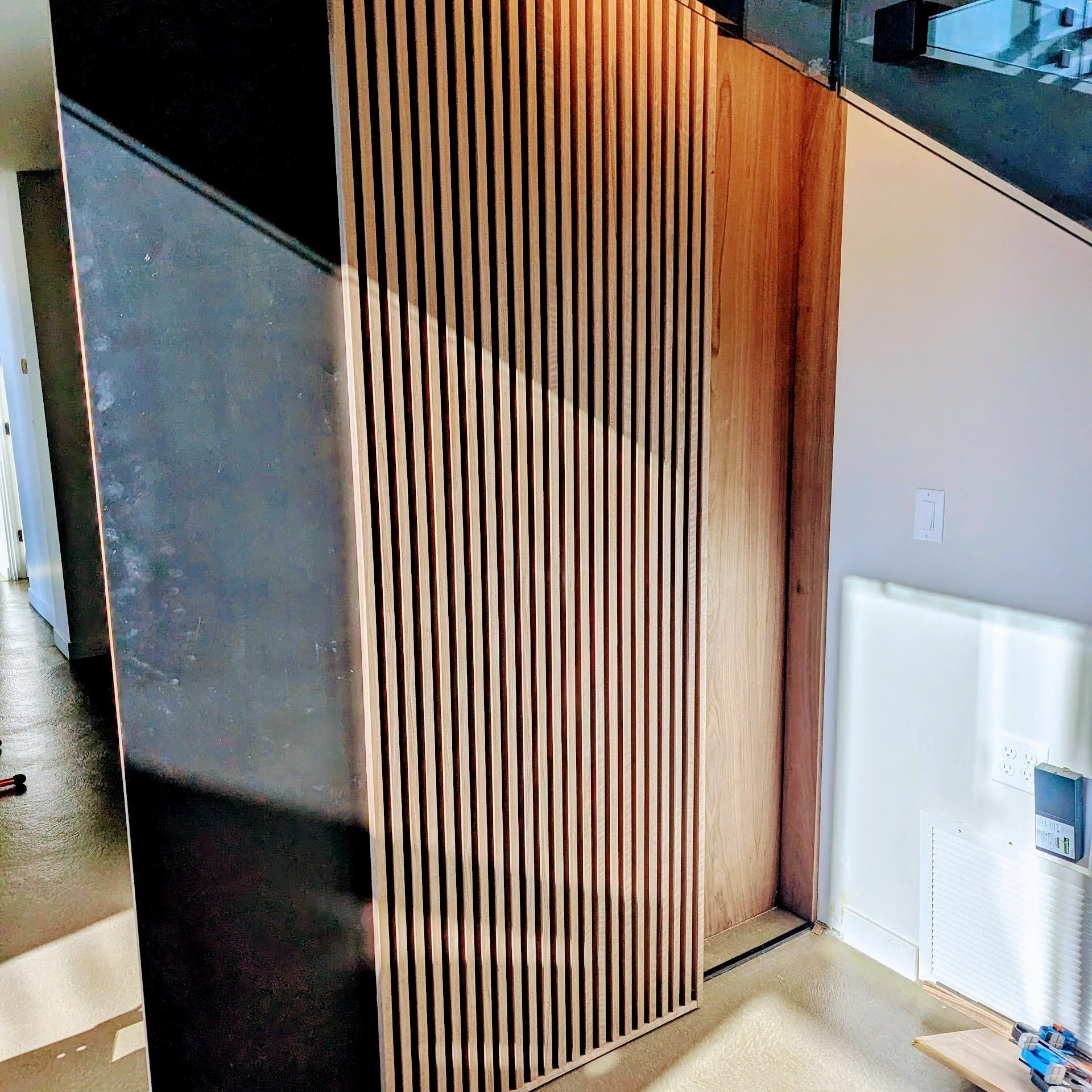
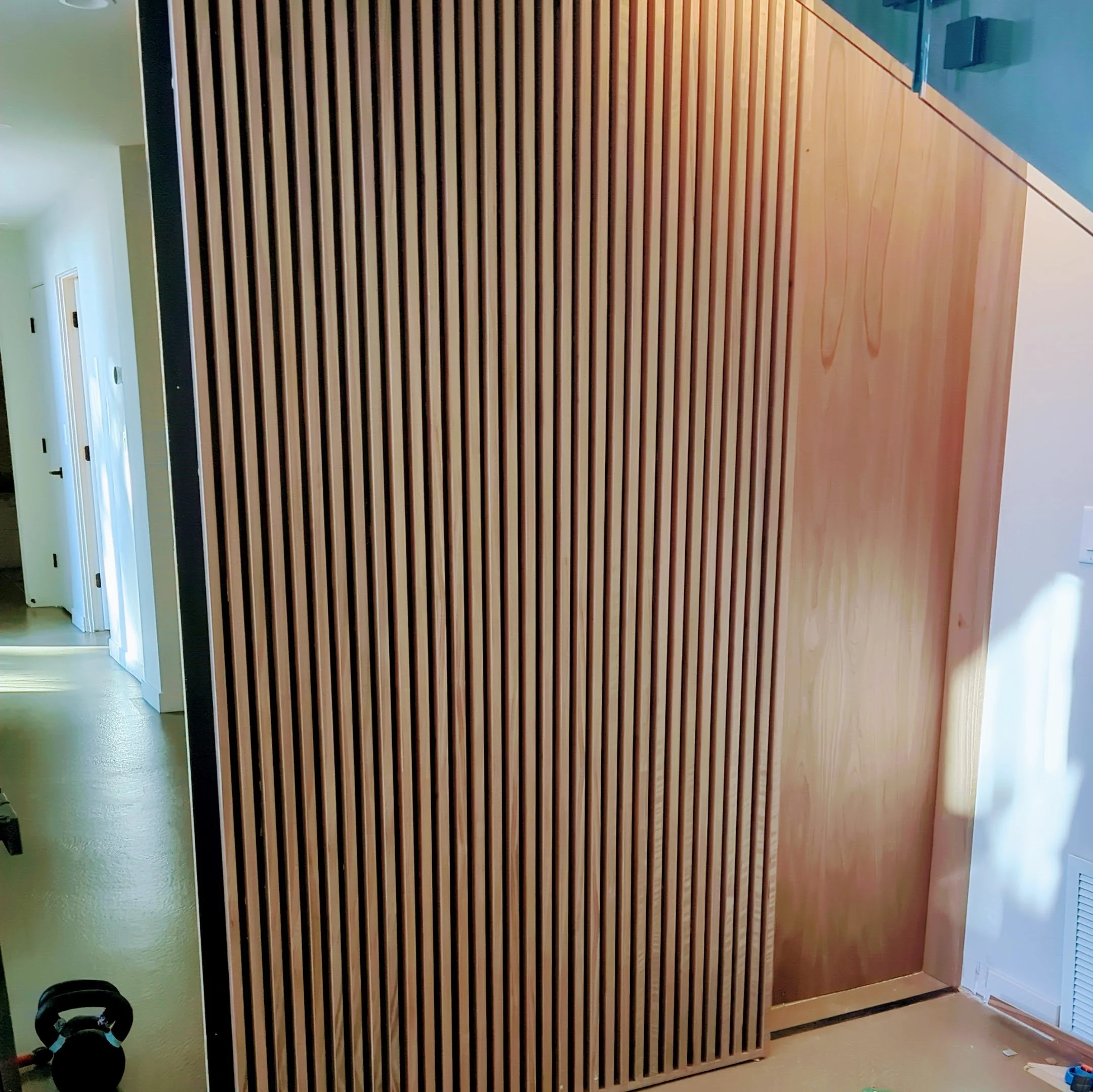

The overarching story of this whole build was: simplify, simplify, simplify.
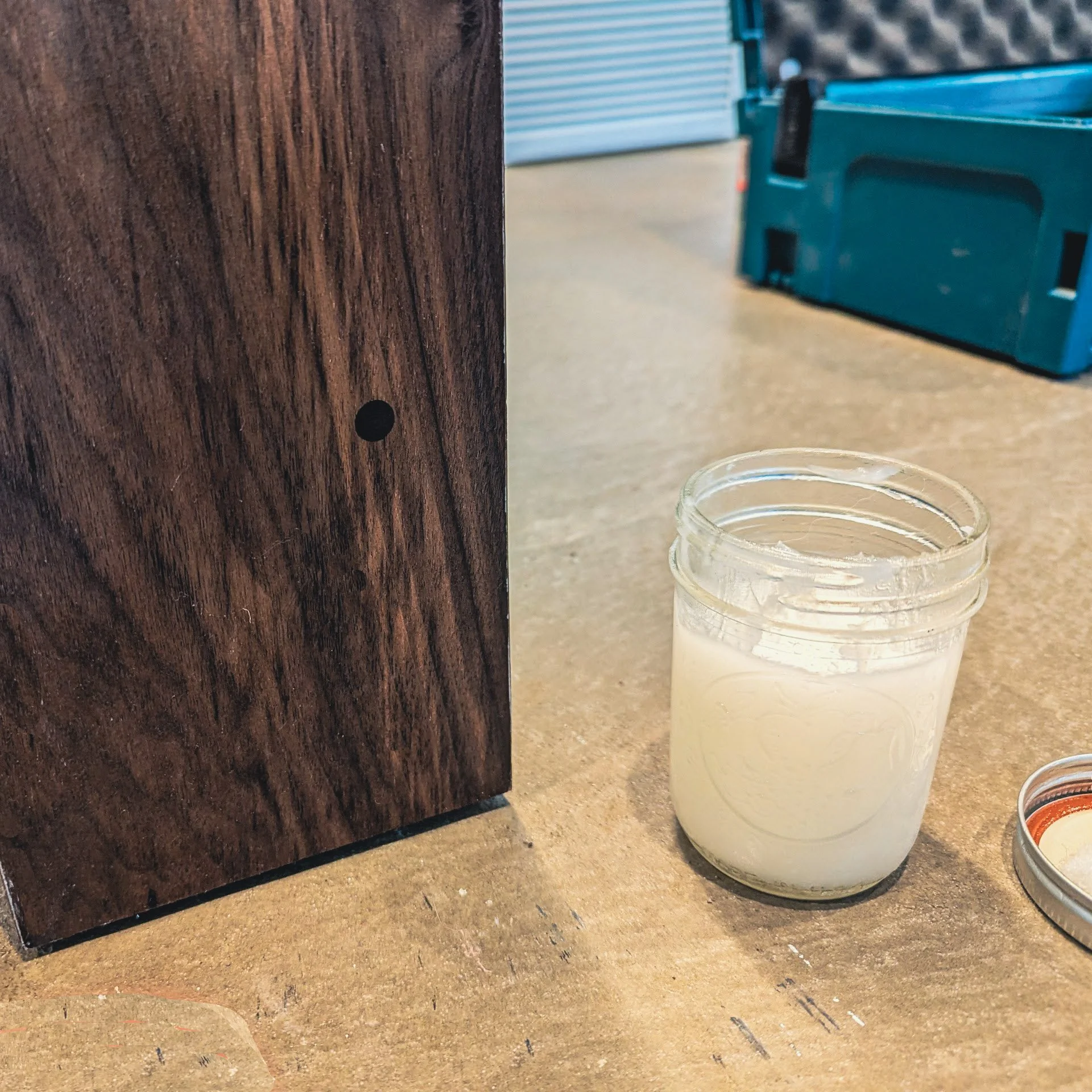
It started with the rail system — I had a complex design, and I stripped it down to bare bones. Inline skate wheels and one tiny curved rail to keep things aligned. That's it. Then the finish followed the same logic. I had a whole plan — multiple coats, multiple products. But after the first coat of oil, I realized the only thing it needed was a little old-fashioned beeswax.
Last time I visited Colombia, I kept wondering — how are they finishing wood this well with far less sophisticated products? Turns out, most of them are just using beeswax in solvent. Simple. I've been reaching for tung oil for years — beautiful results but slow to cure, too many coats, and neither I nor my clients have that kind of patience. Beeswax as a topcoat after oil? Better than most commercial finishes I've tried.
Simplify, simplify, simplify.
And as the build simplified, so did my thinking. Somewhere in the middle of this project I realized that the difference between a mistake and just the next task is mindset. Every step in the process has the same quality — it's a nice problem to have, a nice problem to solve. What we call mistakes only feel that way because we perceive them as detours from the road. But that's just dreaming. There is no perfect road. There's just the next slat, the next cut, the next coat.
Once I embraced that, the project flowed. I was happy. And by the end, I didn't want the door to be done.