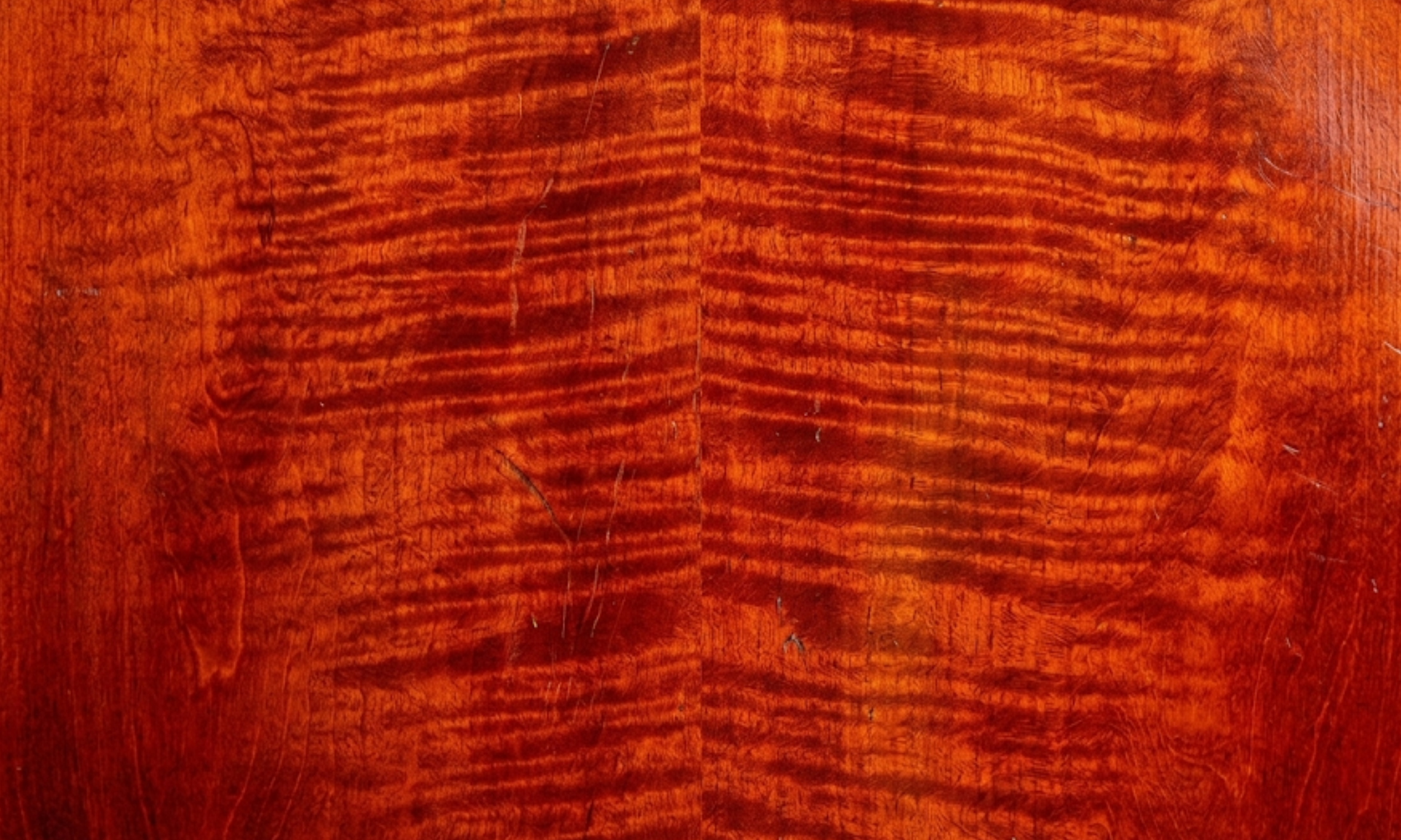


Ben picked up a 3/4 upright bass when the Salt Lake City Orchestra was giving it away. Made right here in SLC — a beautiful instrument with real history. He brought it home and immediately needed somewhere for it to live.
He looked online. Every bass stand he found was the same thing: collapsible tripods, rubber-coated metal, utility-first designs made to disappear. Nothing that matched the instrument. Nothing that treated it like what it is — a piece of sculpture that happens to make sound.
So he called me. And the answer was immediate: yes. This is exactly the kind of project I live for. Instruments are pure sculpture to me, and my family is full of musicians — this one hit close.
The brief was simple on the surface: a sturdy display stand for the living room, stable enough to survive a house party. But the real brief was unspoken — this instrument matters. It deserves more than a tripod.
We started with three concepts and zero tripods. If Ben wanted a tripod after seeing all three, we'd design him one. But we lead with vision.
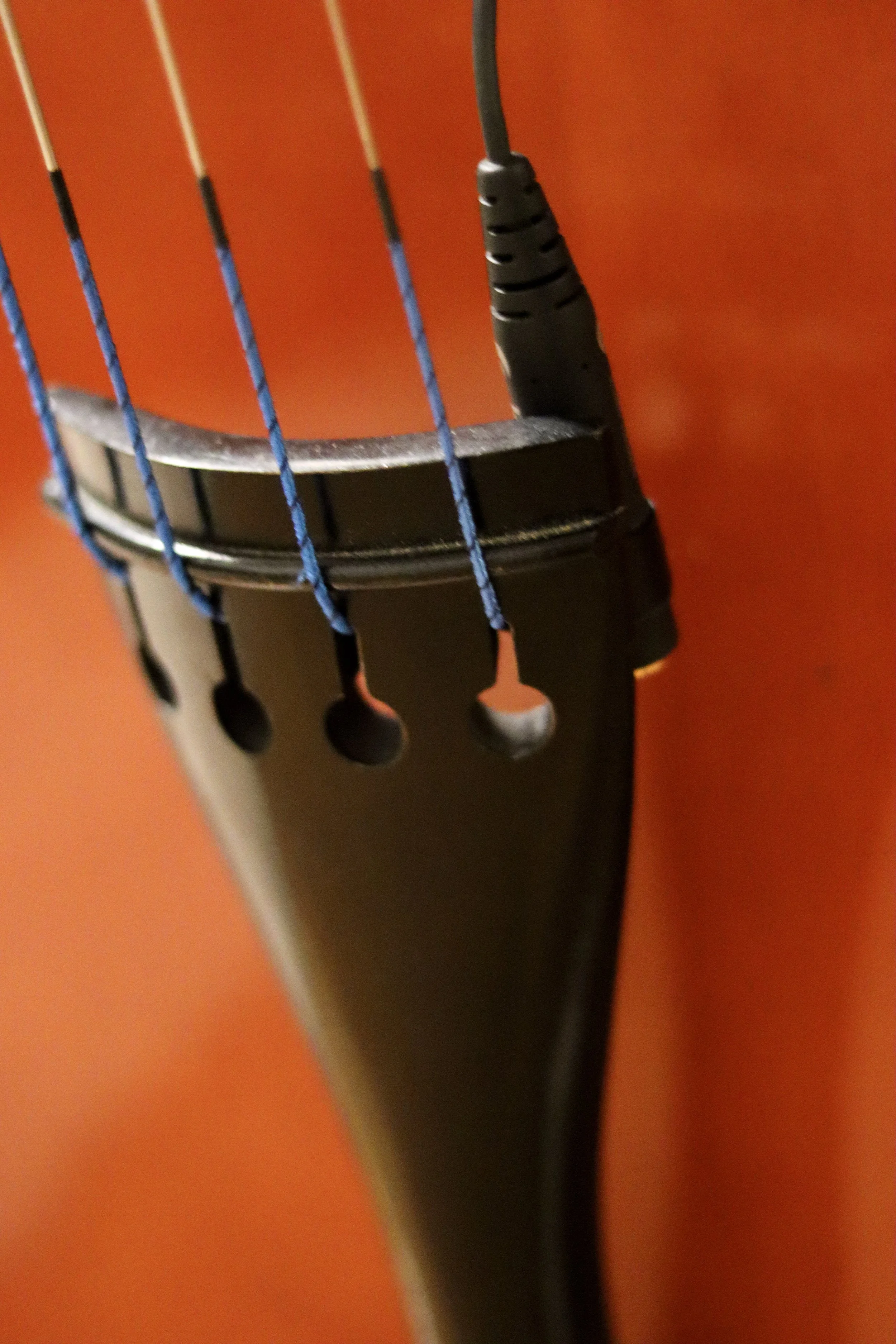
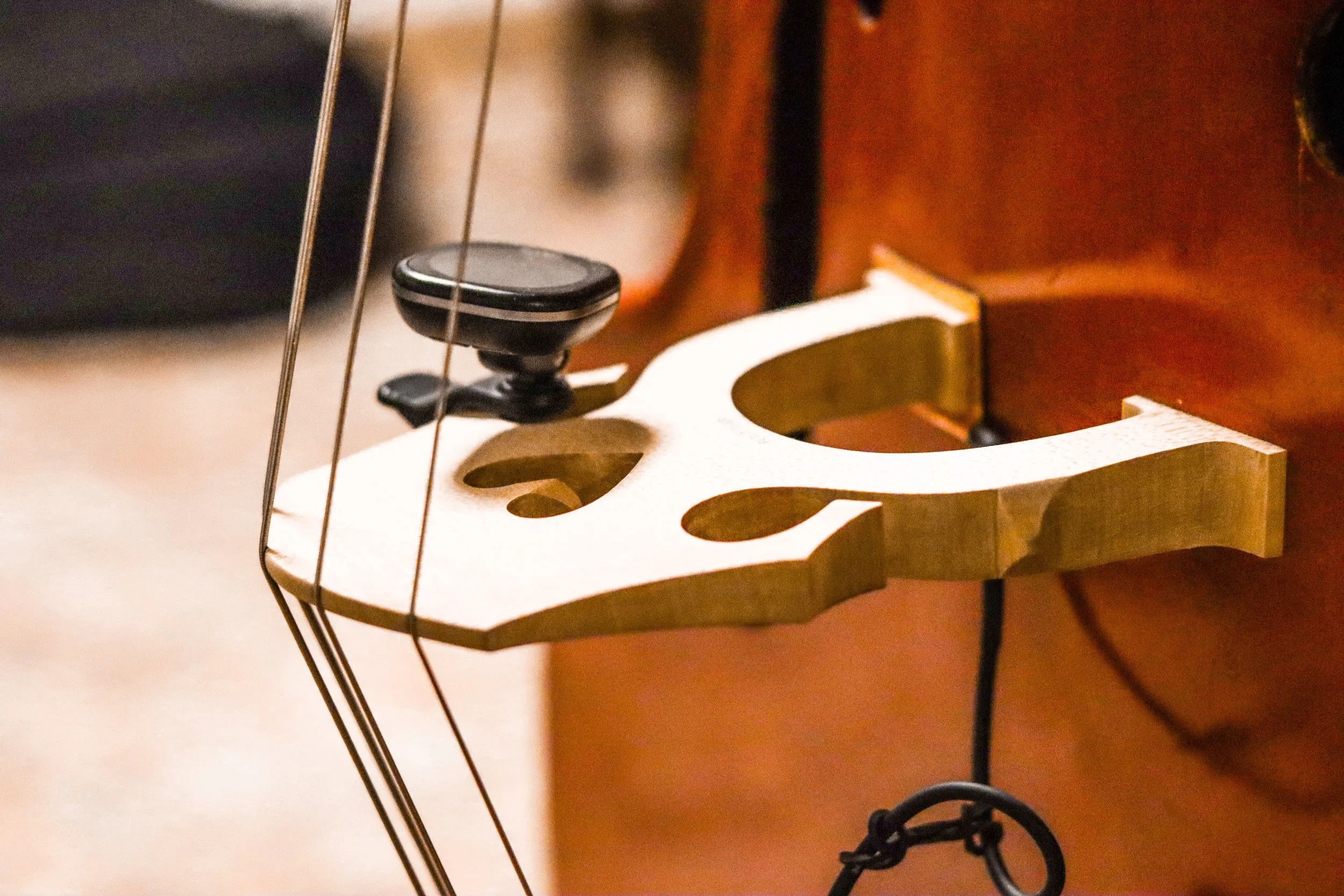

I started where any good design starts — with the physics. An upright bass needs two things: two points of contact on the body and elevation off the ground through the endpin. That's the minimum. Every commercial stand on the market stops there — function solved, move on.
But solving the physics is just the starting point. The question after that is: what does the stand deserve to look like? You've got this gorgeous instrument with a century of curves and craftsmanship, and it's going to sit in your living room every day. The base needs shape. It needs intention.
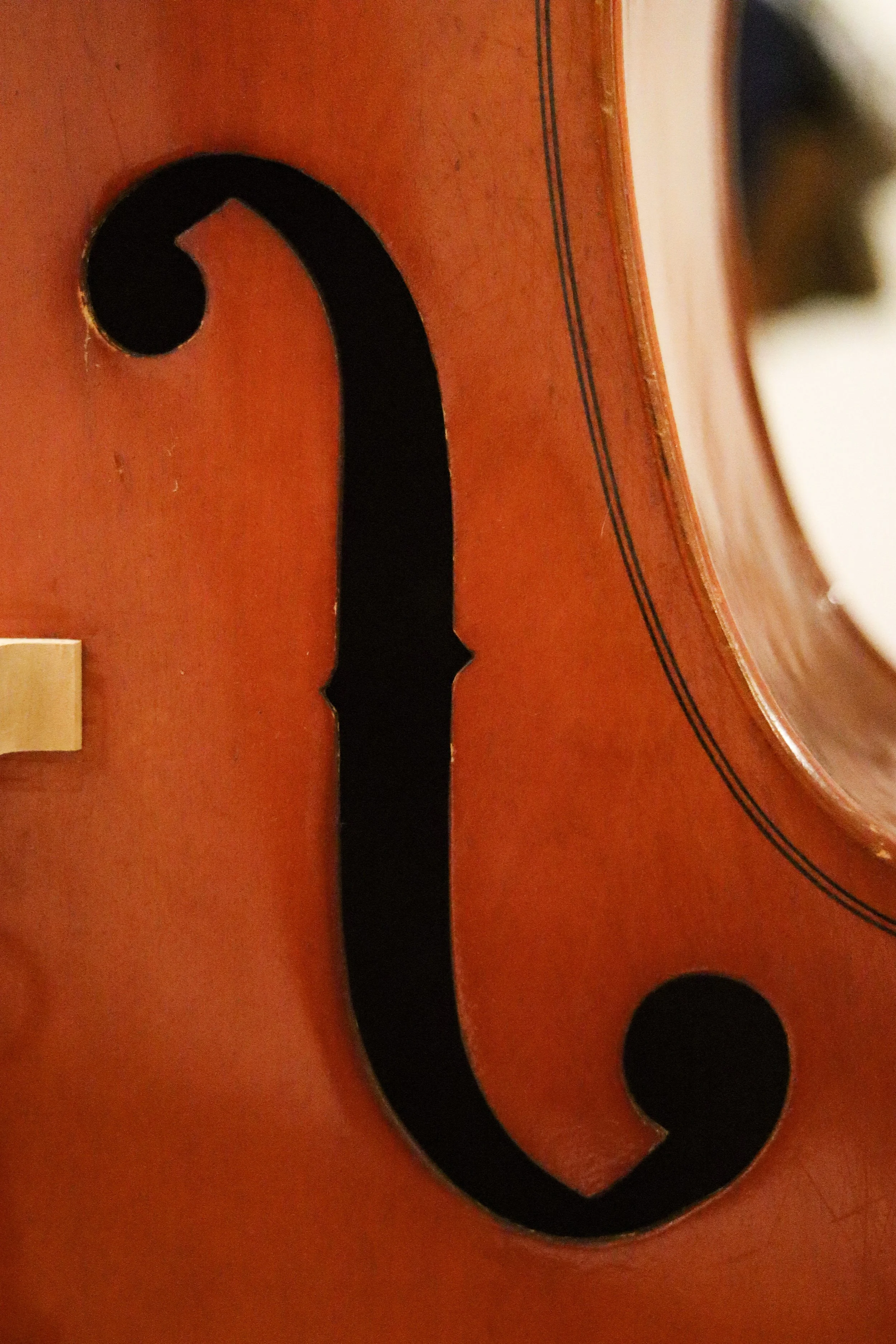
I went in two opposite directions to give us enough range to find the answer. The first was an asymmetrical design that plays off the f-holes of a classic string instrument — organic, musical, a direct conversation with the bass itself. The second was a Voronoi pattern: mathematical enough to resonate with music, but abstract enough to have nothing to do with it. One design says "I know what I'm holding." The other says "I'm beautiful on my own terms."
But before any of that mattered, we had to answer the only question Ben actually cared about: does it survive a house party? People dancing, stomping, shaking the floor — the stand needed to hold. So we prototyped.
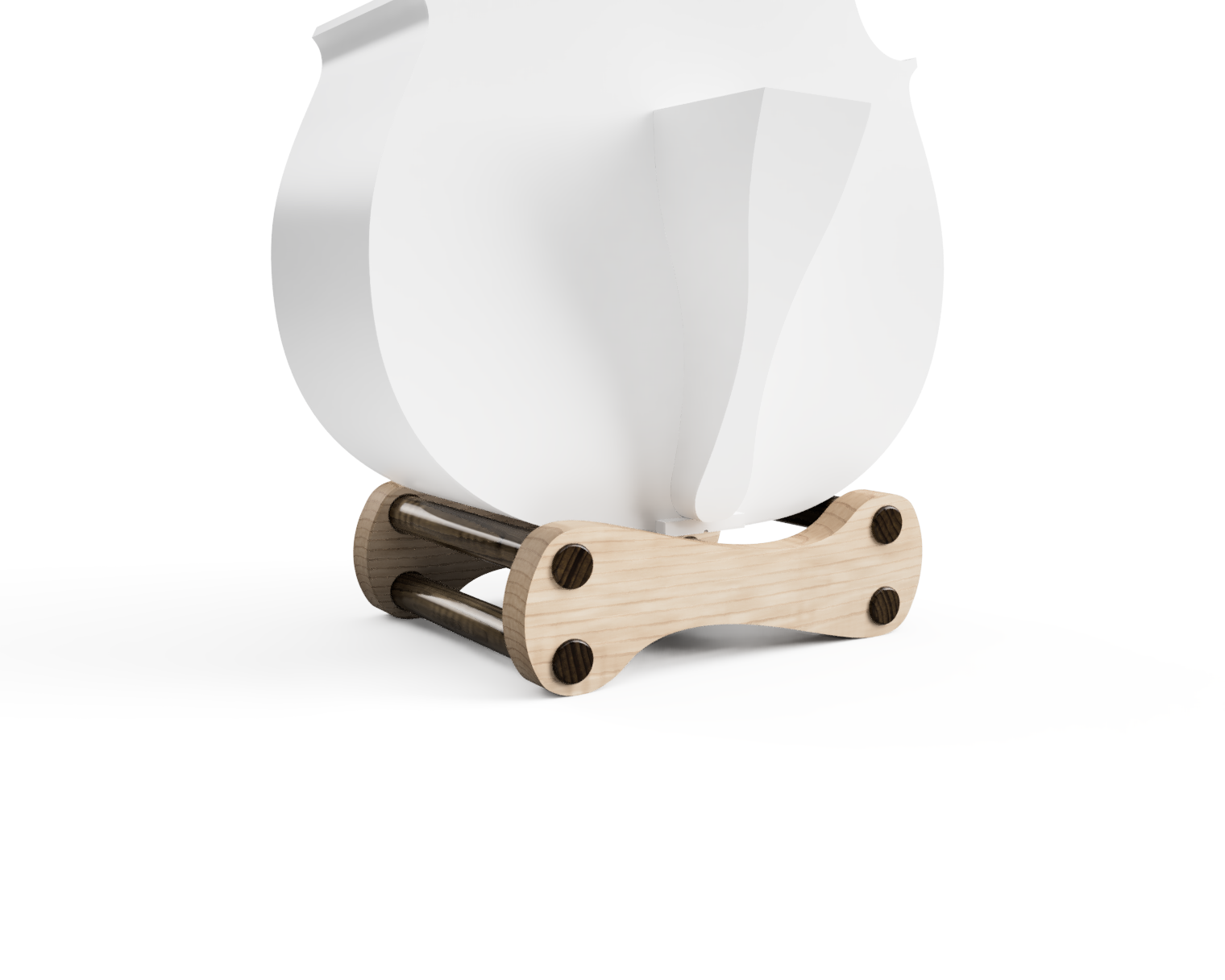
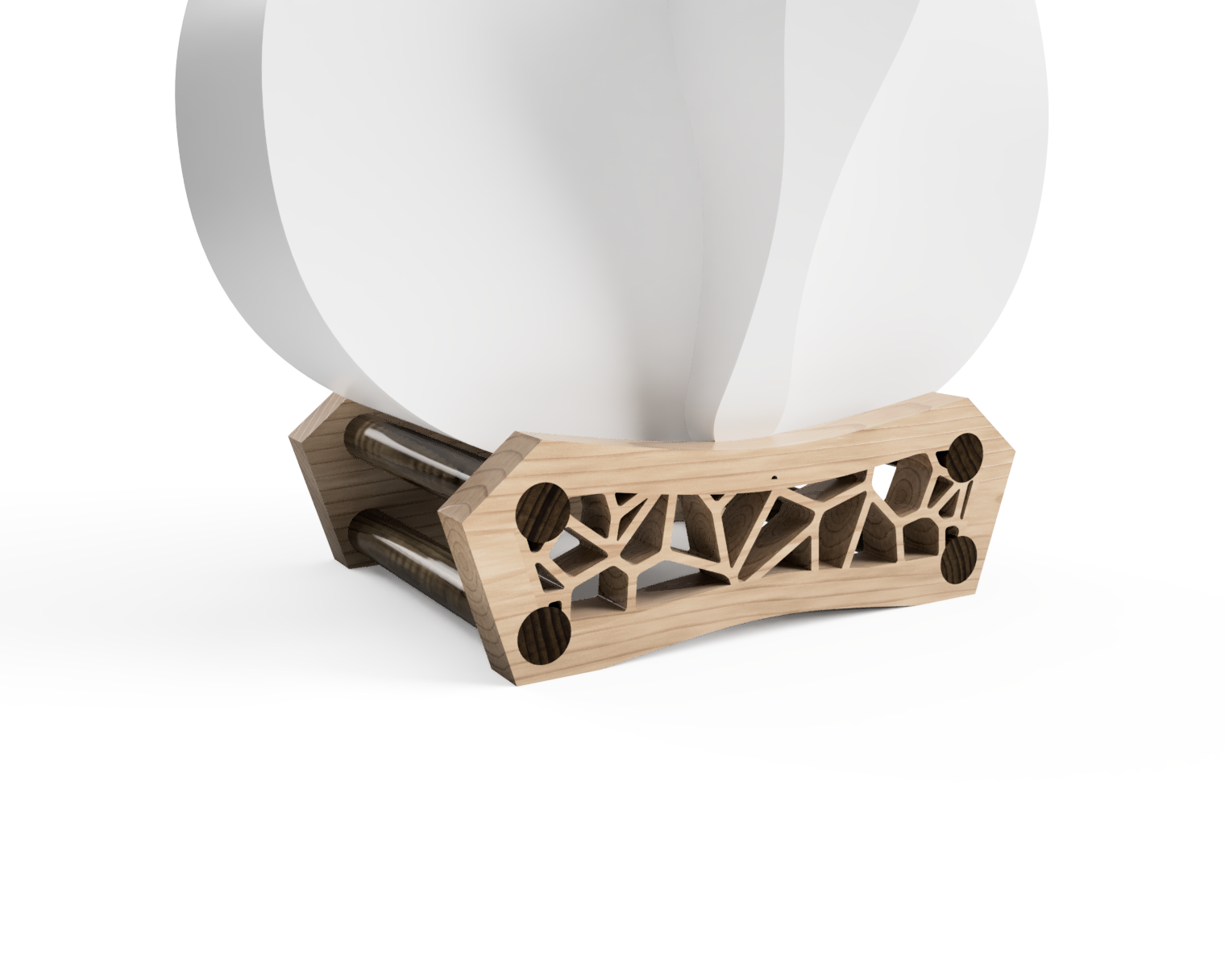

If the design with the most material removed could hold, everything else was guaranteed. The Voronoi pattern cuts away more wood than any other concept — organic cells carved through the side panels, load distributing naturally through the web. It's also the most complex CNC work of the three. So the logic was simple: set up the machine for the hardest version first. If you can handle that, you can handle anything.
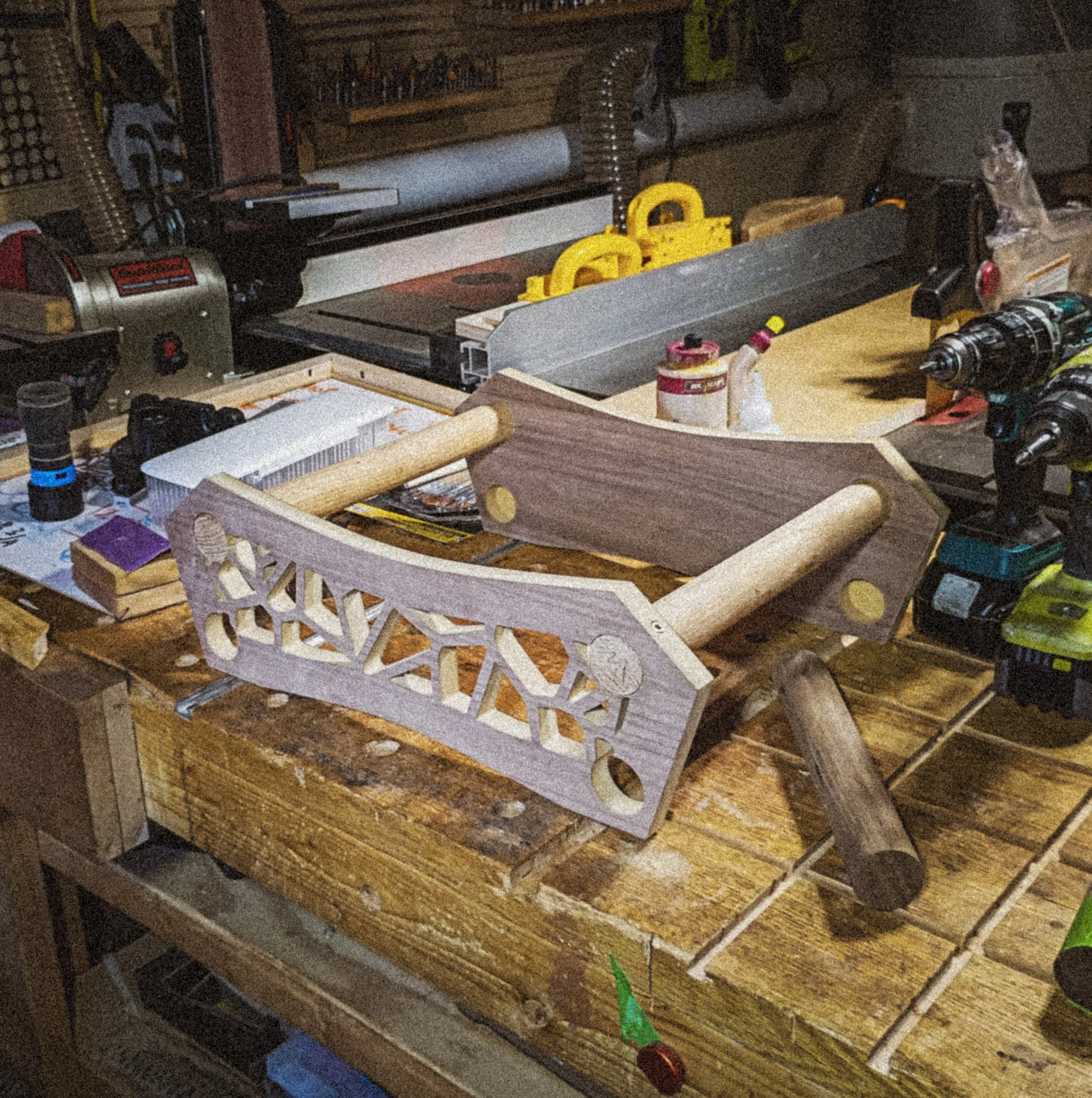
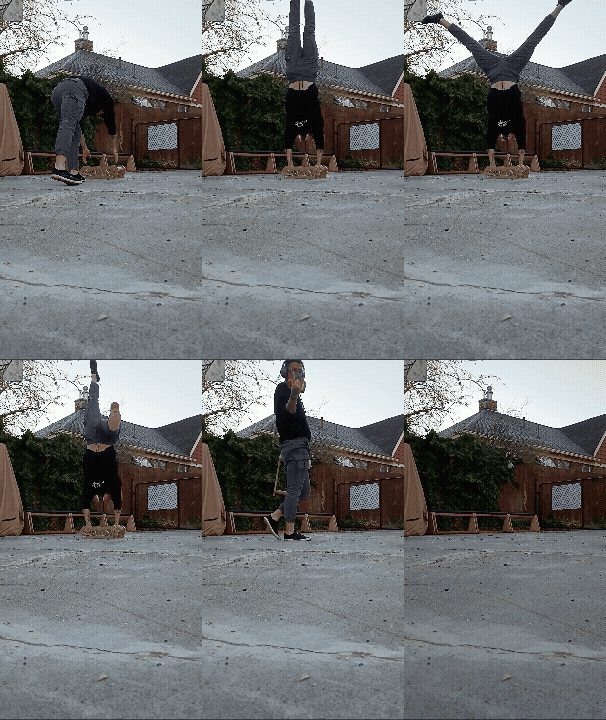
I built the prototype out of MDF plywood for the panels and two old oak dowels I had lying around the shop. Nothing precious — just enough to prove the physics. And the moment it was assembled, I tested it the only way that made sense to me: I did a handstand on it.
It held. So I did a whole workout on it the next day. Two dowels. Thin MDF panels. Full Voronoi cutout. Still standing.
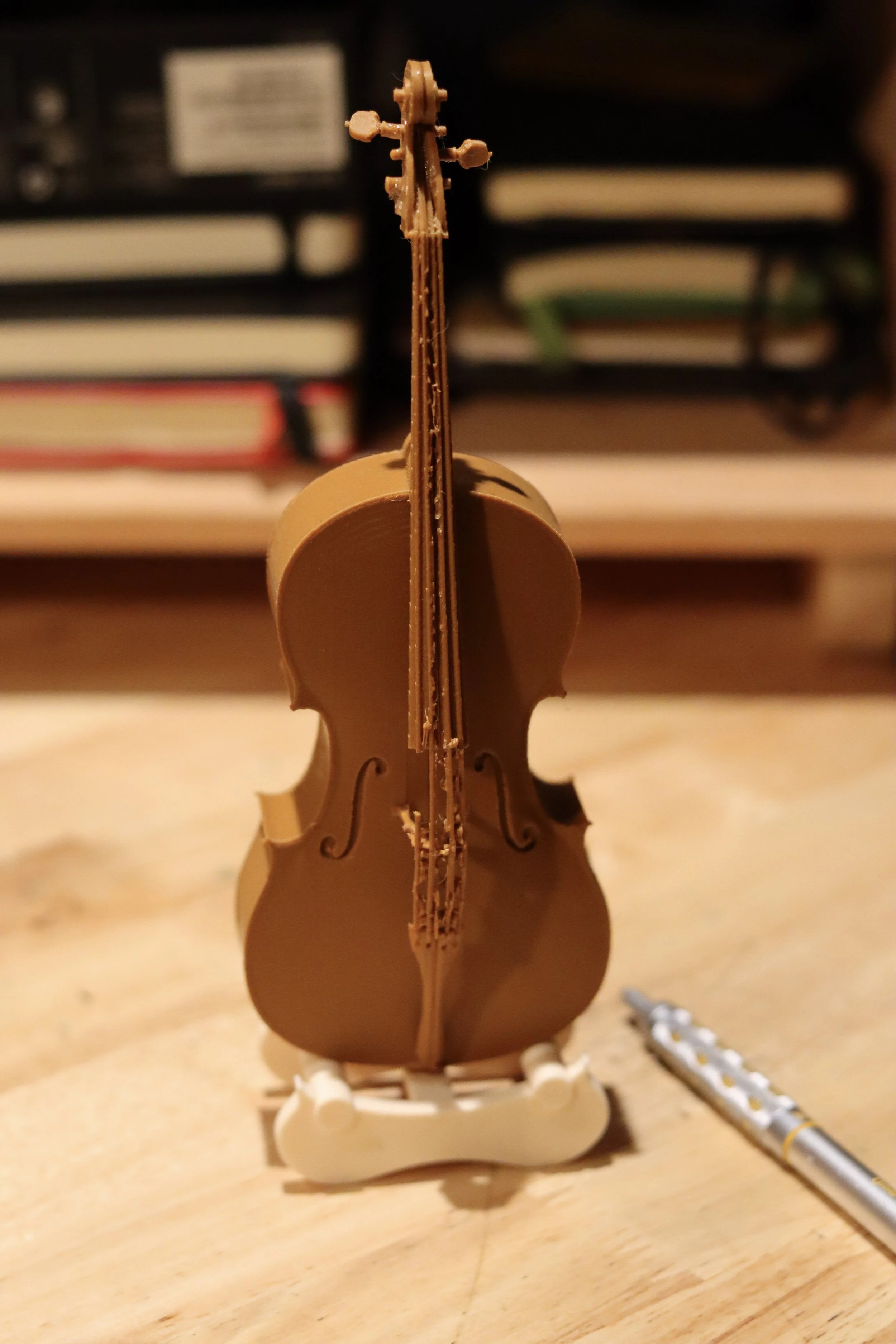
But party-stable means more than static load — it means vibration, movement, someone bumping into it while dancing. That's an earthquake problem. So I printed a second, smaller prototype on the 3D printer with a base that let me simulate exactly that: shake it, bump it, try to knock it over. It held.
Two prototypes. Two passes. The concept was proven.
The Voronoi is — honestly — a lot of my brain on display. Mathematical, structural, maybe too much me. But that's the beauty of presenting three directions: you put your vision out there and let the client pull you toward what resonates with them. With the engineering validated, I put together the presentation for Ben and let him choose.

This was a job of patience.
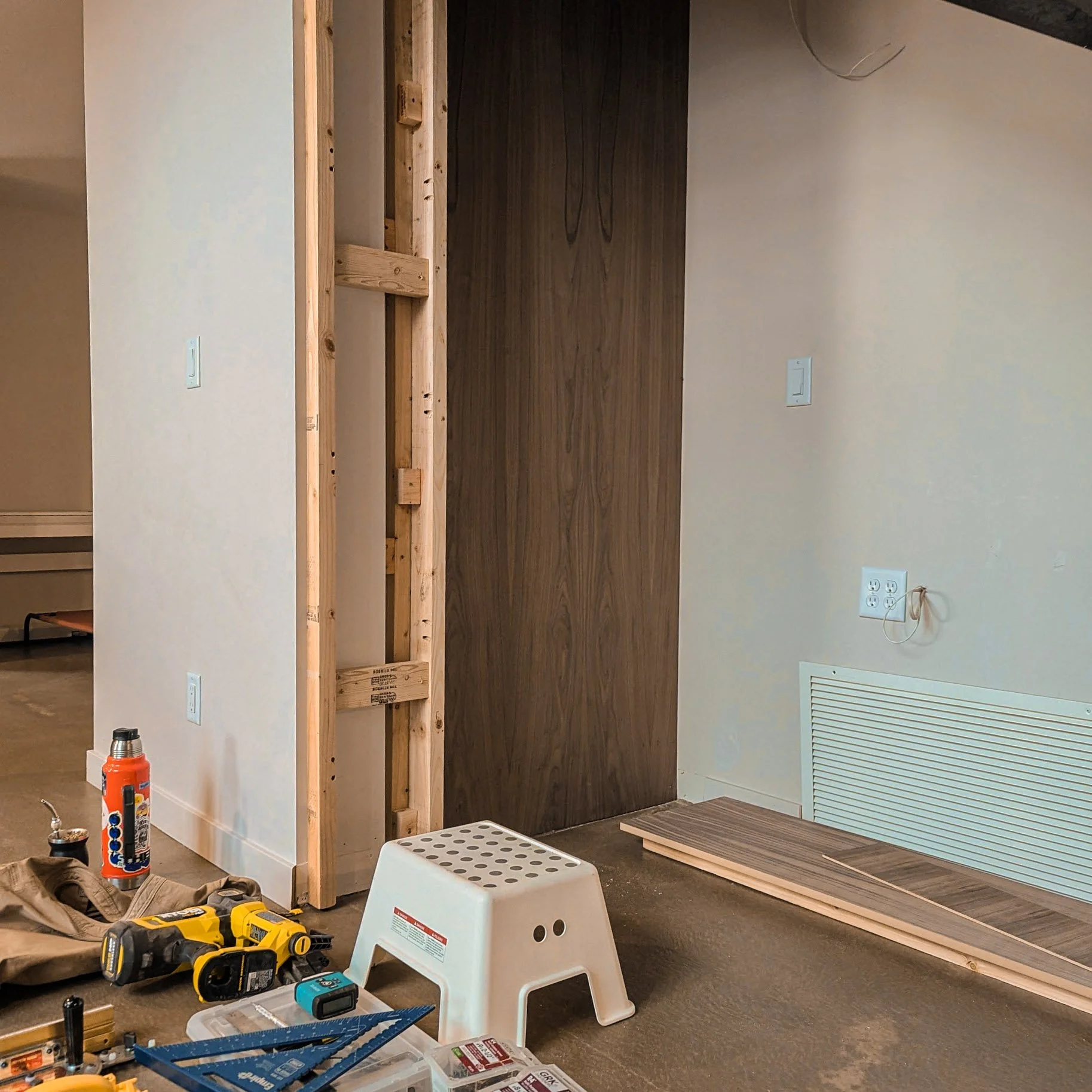
It starts with the framing — and framing is ugly work. You're building with pine into drywall, raw and rough, and you have to resist the urge to make it pretty because no one will ever see it. That's harder than it sounds. You want to finesse everything, but the frame just needs to be square, solid, and gone. For a moment, bolting into drywall feels precarious — not stable enough for what's about to hang on it. But then it locks in, and it holds, and you trust it.
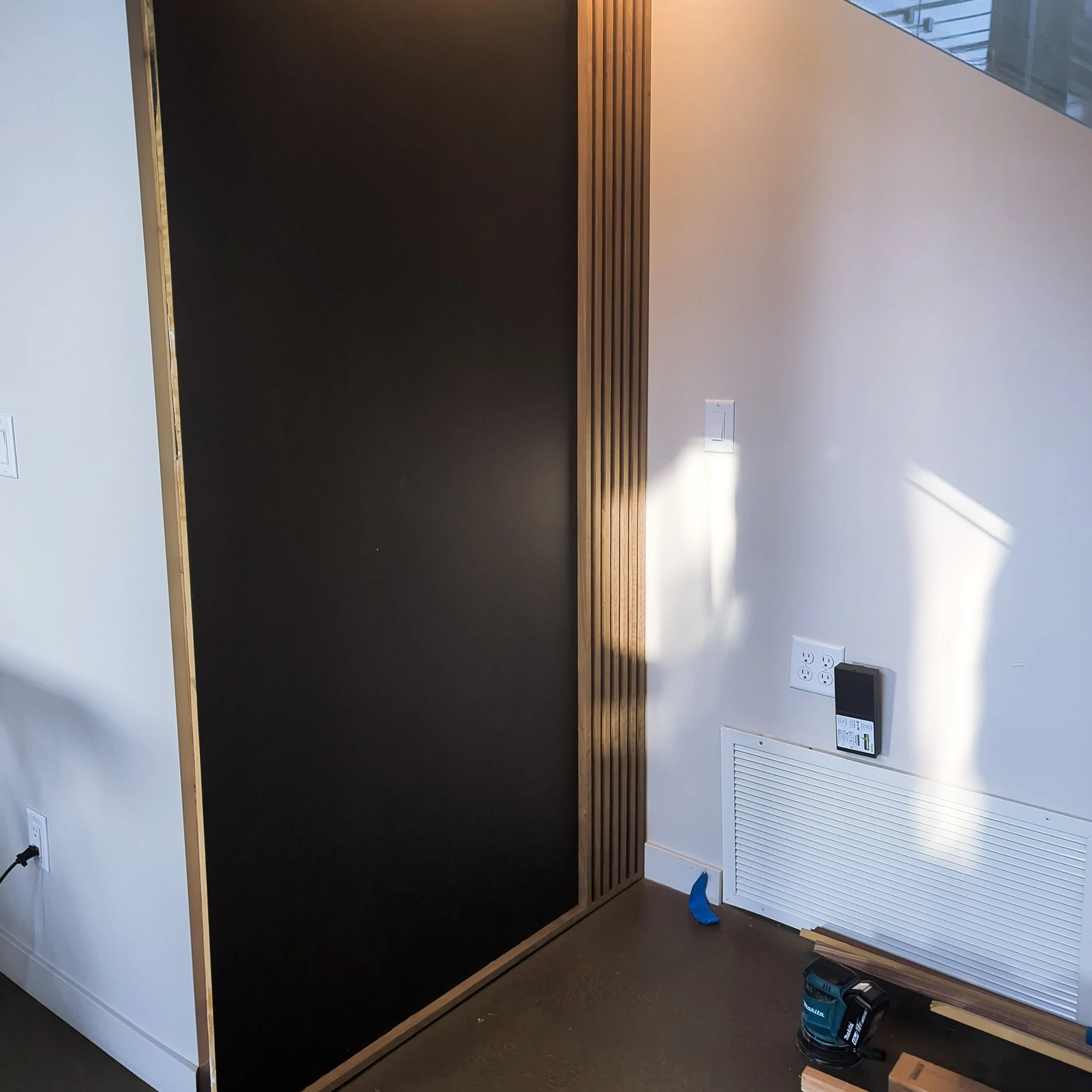
Once the frame was up and the closet panels went in, things changed. The space started to make sense.
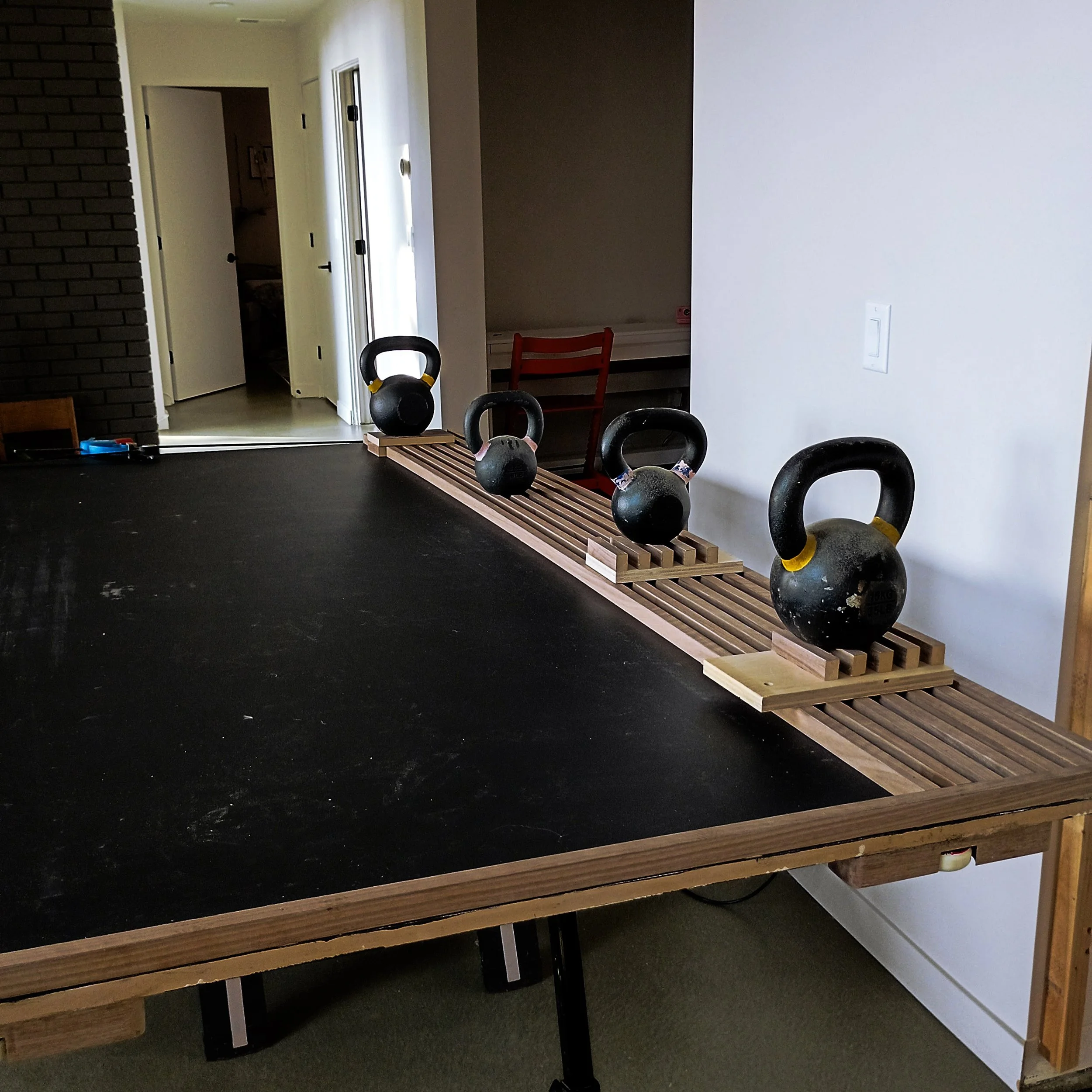
Then came the door. All the preparation in the shop paid off — every slat cut to spec before I ever showed up on site. You can't clamp slats onto an MDF panel the traditional way, so I used something simpler: dead weight. Kettlebells. Just set them down on the glue line and let gravity do the work. Then it's one slat at a time, slow and careful. The goal isn't to finish fast — it's to do the best job you can, which is a different kind of discipline entirely.
With a design like this, even a minor deviation screams at you. So you take your time. You deal with the discomfort of imperfect materials — wood glue that doesn't behave like wood, MDF that drinks paint, drywall that isn't quite plumb. You manage the mess and trust the process.
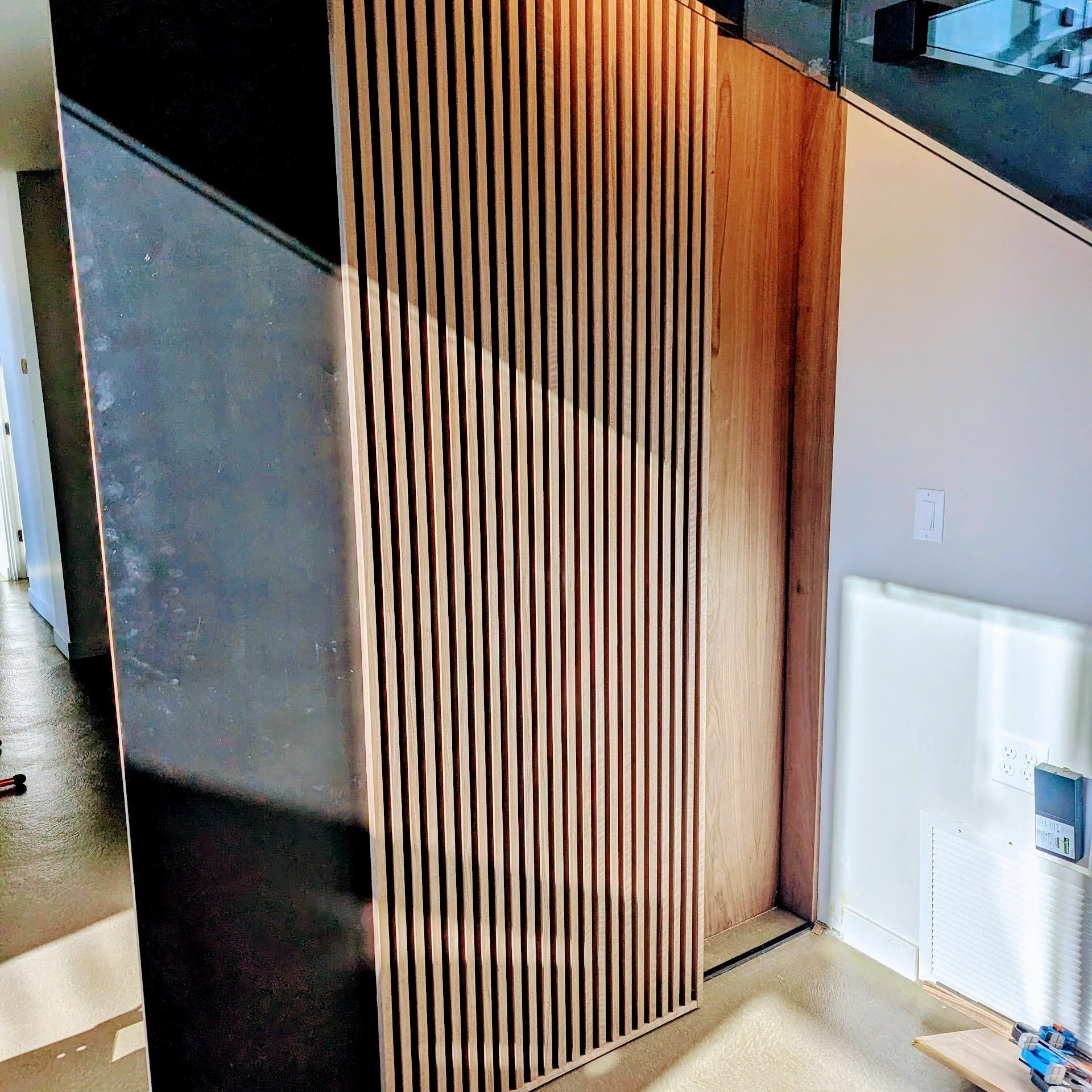
Each new slat added more weight to the wheels and the custom rail system I'd built from scratch. Every inch closer to the left side was a nerve-racking test: is this whole thing actually going to work?
The day I hung the full door for the first time — unfinished, not all the slats on yet — it held the weight and rode smooth. That was a fucking nice day.
Fortunately, I had Jefe by my side the whole time — Ali and Eduardo's dog — and that beautiful sunlight hitting the nook just right to keep me going.